The Lost Victorian Funfair at Devil’s Dyke
One of my big time interests is industrial archaeology: the history, evolution and heritage of industry and postindustrial spaces. I love any kind of manmade relic that has been reclaimed by the landscape, like old signs, railway tracks, bits of building, concrete footings and empty tunnels.
One Monday morning a few weeks ago, under the last of the summer sun, I took the kids and the dogs on a mini adventure to the Devil’s Dyke, a large chalk combe in Sussex, just north of Brighton. We drove for an hour, eating doughnuts on the way, and spent two hours walking around the valley, Olive on foot, Ash in his pram, and the dogs hurtling around like buffoons.
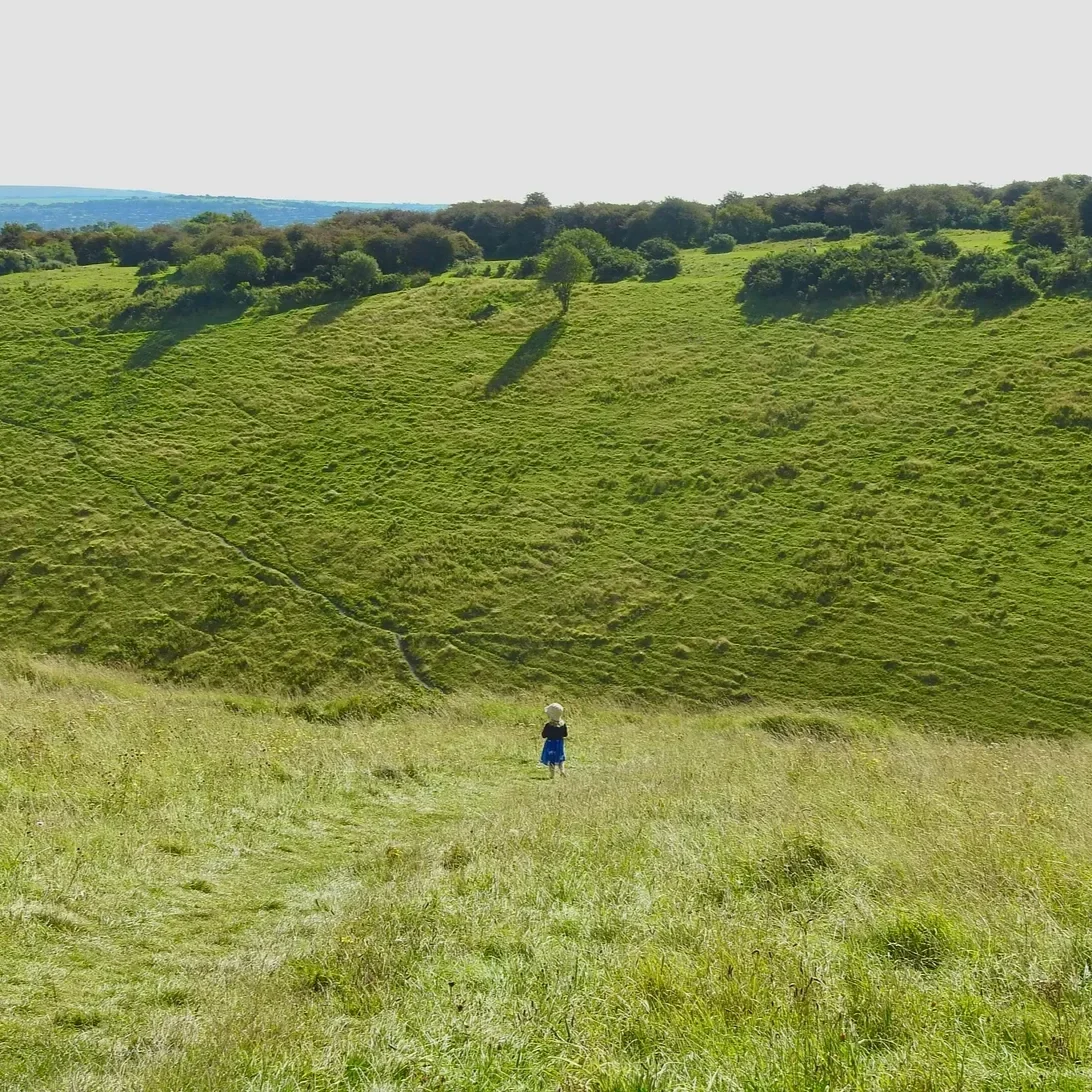
Olive enjoying the view
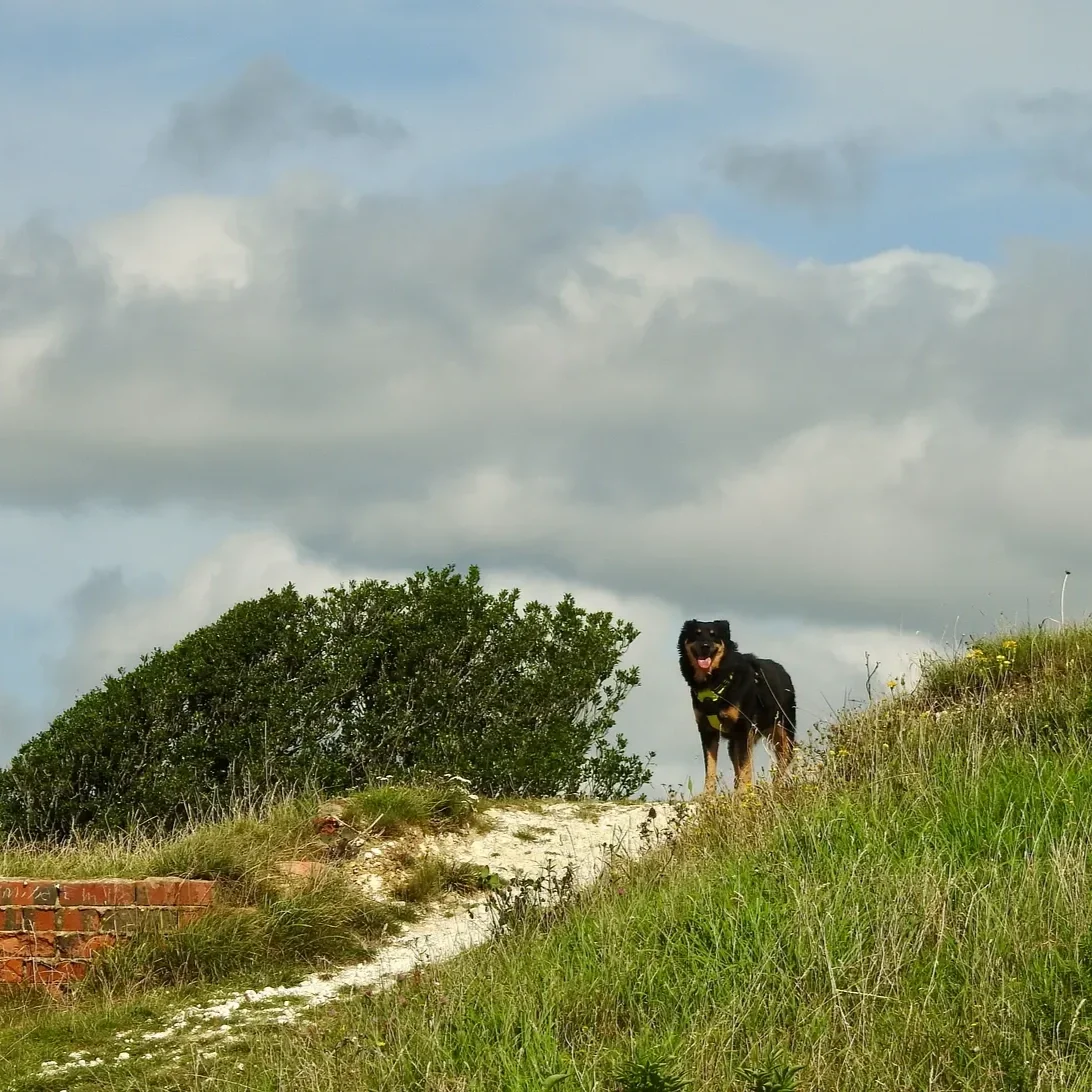
Tequila enjoying the view
The visit came about because I had just read a piece in the National Trust magazine about the South Downs, where they mentioned something about an abandoned Victorian funfair. My ears a-pricked, I did some Googling and found out they were referring to an old amusement park that once stood on the summit of Devil’s Dyke, with band stands, swing boats, a switchback railway, merry-go-round and Hotchkiss bicycle railroad - this English Heritage video shows some great footage. None of the fairground itself is still there (although apparently you can trace the bicycle railroad track if you know where to look) but there are still treasures to find, including the remains of the funicular railway and the cable cars that once ran across the valley.
In the photo below, you’ll see one of the concrete slabs I was most looking forward to finding. As far as I can tell, this is the base of one of the cast metal supports that pulled visitors across the valley. Built in 1894, the cable railway was made from 1,200 feet of cable suspended 230 ft above the valley floor, with two cars each carrying four passengers back and forth, powered by an oil engine. Its popularity was short-lived and it closed in 1909, but the foundations are still there, slowly blending back into the hillscape.
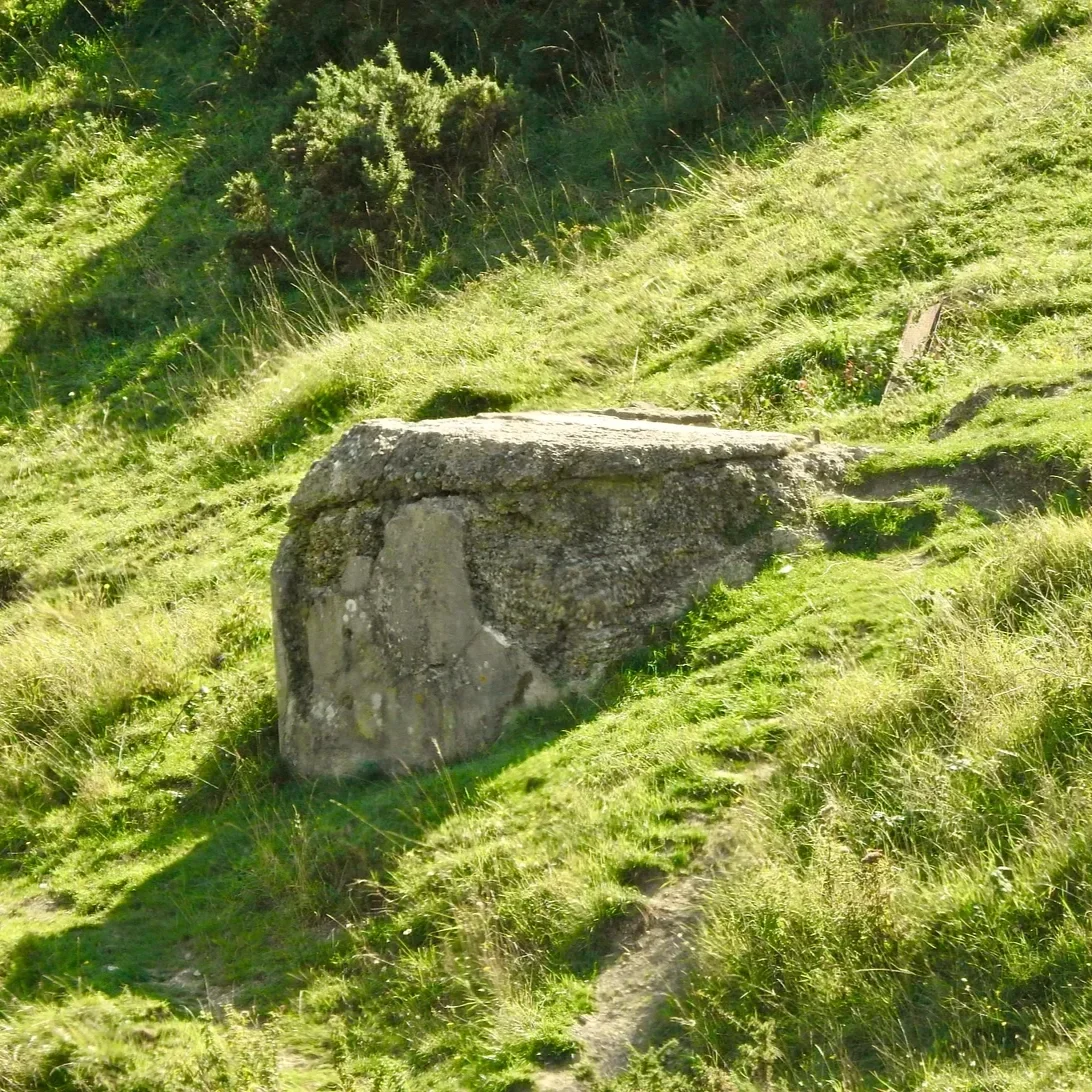
The remains of the cable railway
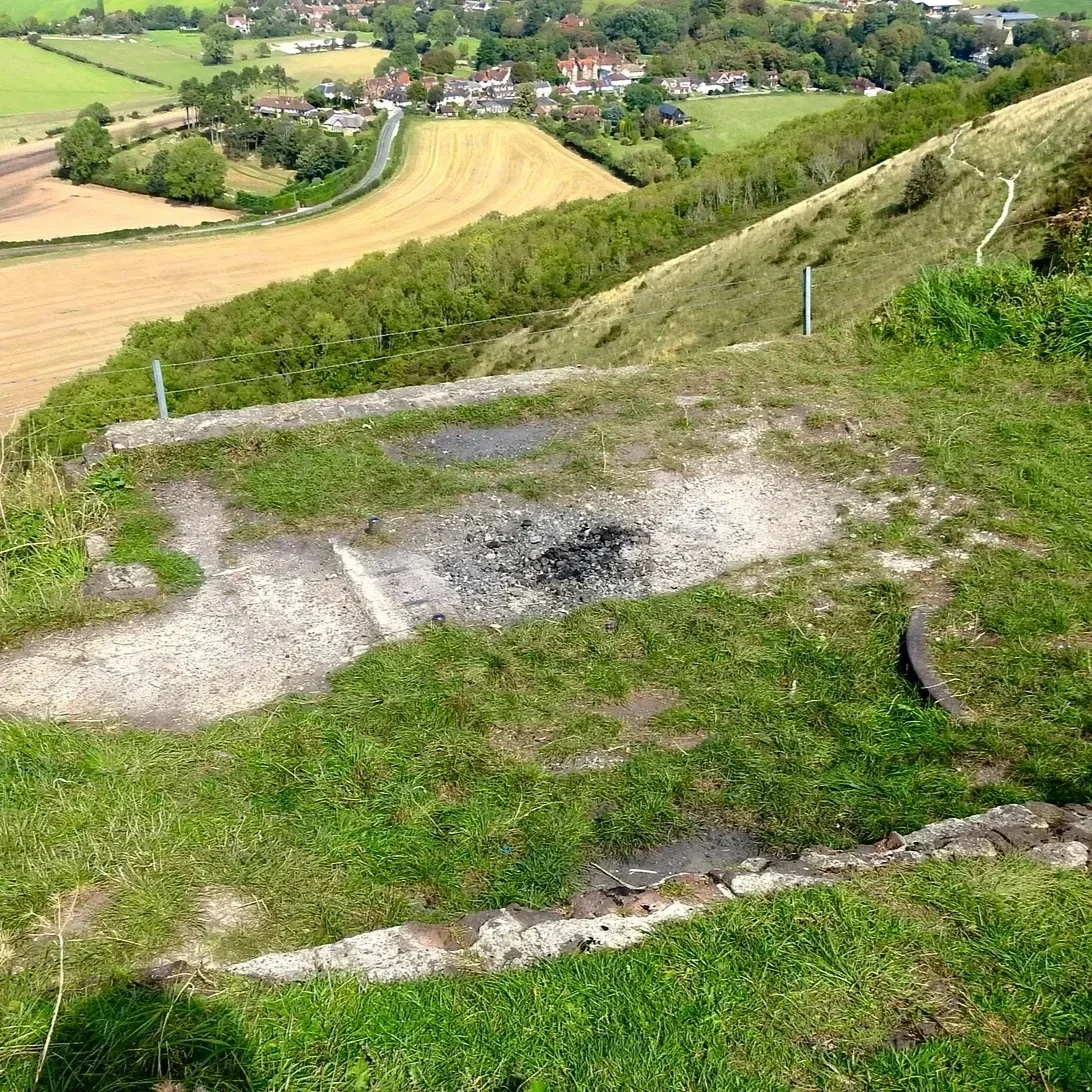
The remains of the railway station
The second relic I wanted to see was another shapeless stone slab, this one the foundation stone of the steep grade railway station, which sent visitors down the hill into the village of Poynings, where apparently you could get a banging cream tea. This railway opened on 1897 and closed around ten years later, another short-lived attraction on the Dyke, but luckily for us you can still enjoy the view from the station. There’s even a bit of circular metal in the bottom right quadrant of the photo but I’m not sure what it was. Such mystery! Such intrigue!
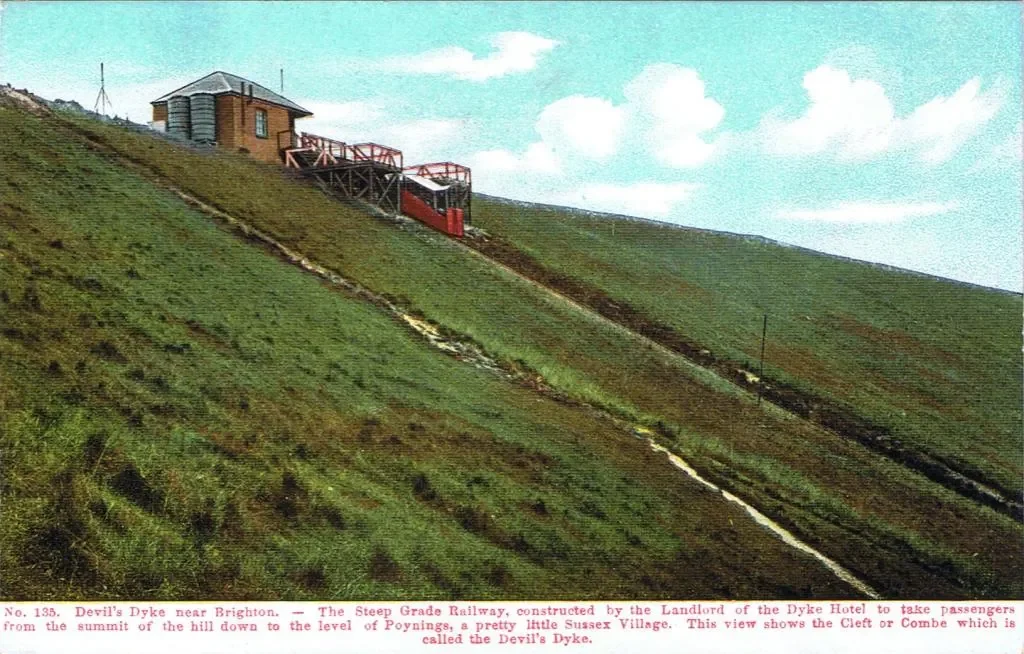
A postcard showing the railway station
There’s something about being in the presence of historical objects that feels deliciously eerie, like they are still reverberating with the ghosts of their past, the lives soaked up by their presence, the voices that once echoed off their walls. These are the remnants we leave in the landscape, the ‘ugly’ stuff that often gets overlooked, ghosts of industry coarsely grafted onto the earth.
The Devil’s Dyke did not disappoint, but I’d love to know if you have anything similar to recommend. Any abandoned places you love to visit? Any old bits of machinery left to rust in the corner of an old quarry? Any closed railway lines turned into walking routes? Send me your recommendos, I beg!
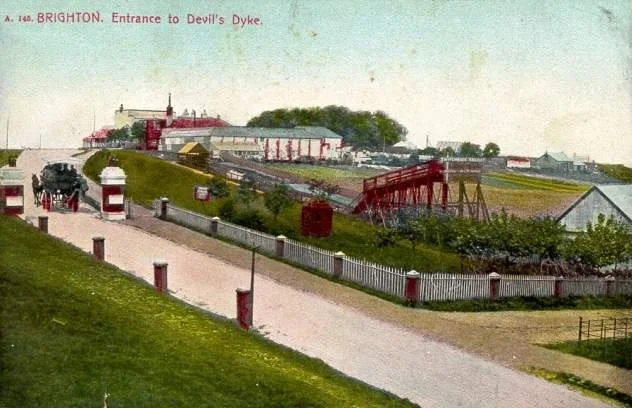
Another image of the ‘attractions’ on top of Devil’s Dyke - I think the red thing on the right might be a small rollercoaster?
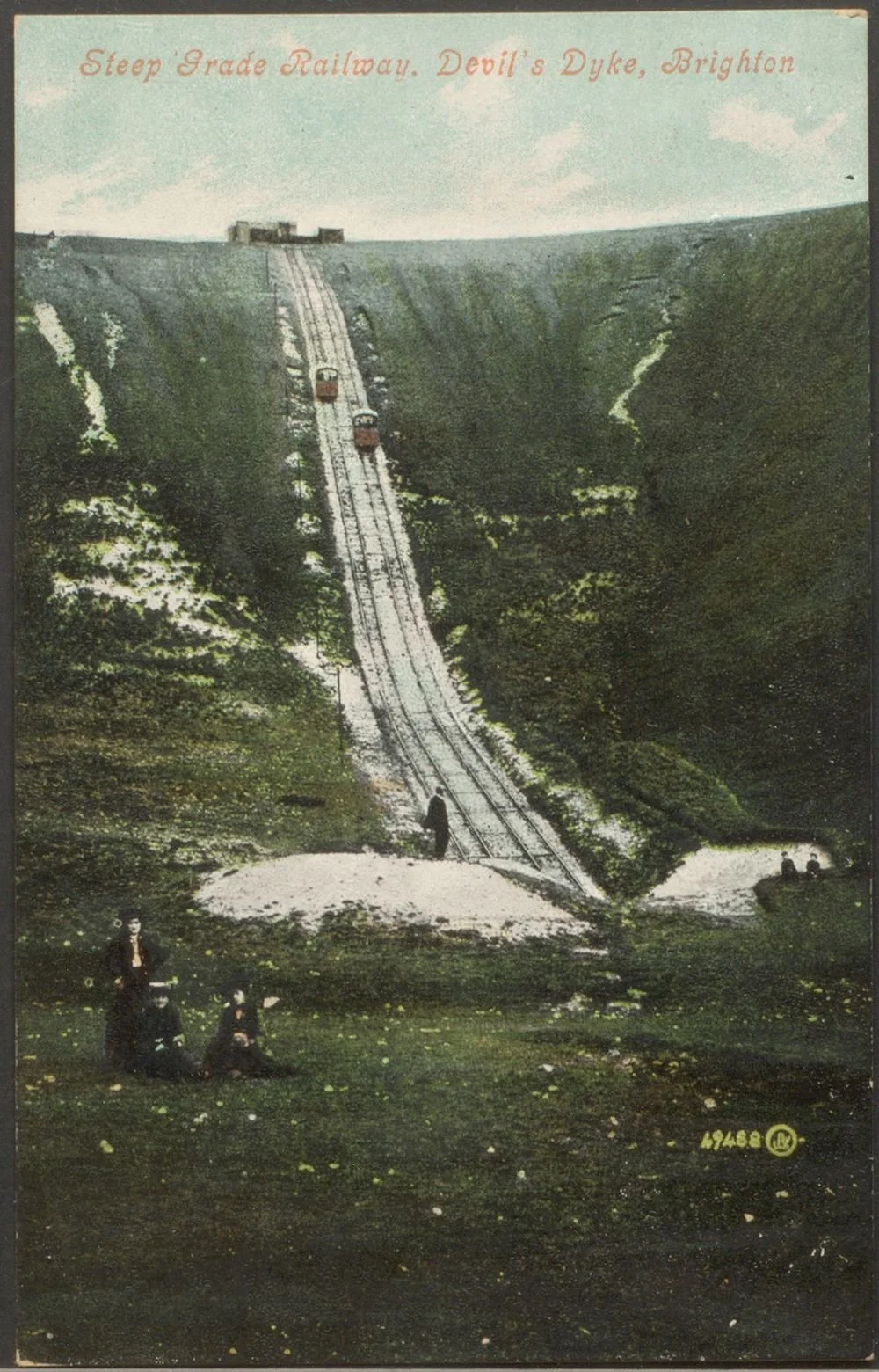
Another image of the steep grade railway going into the valley
