Rooting through London’s Lost Gardens
There are glasshouses on the forecourt with potted seedlings locked inside. Behind them, the deconsecrated church of St Mary-at-Lambeth, home to the museum collection, towers over the palace road and the river beyond. Espaliered trees grow against the walls, wired and bare in the winter sun that rubs against panes of stained glass and makes shadows out of feathered palms. This place of worship has been reassigned to the original goddess, and here at the heart of the sprawling city, layers rest upon layers of hallowed, living ground.
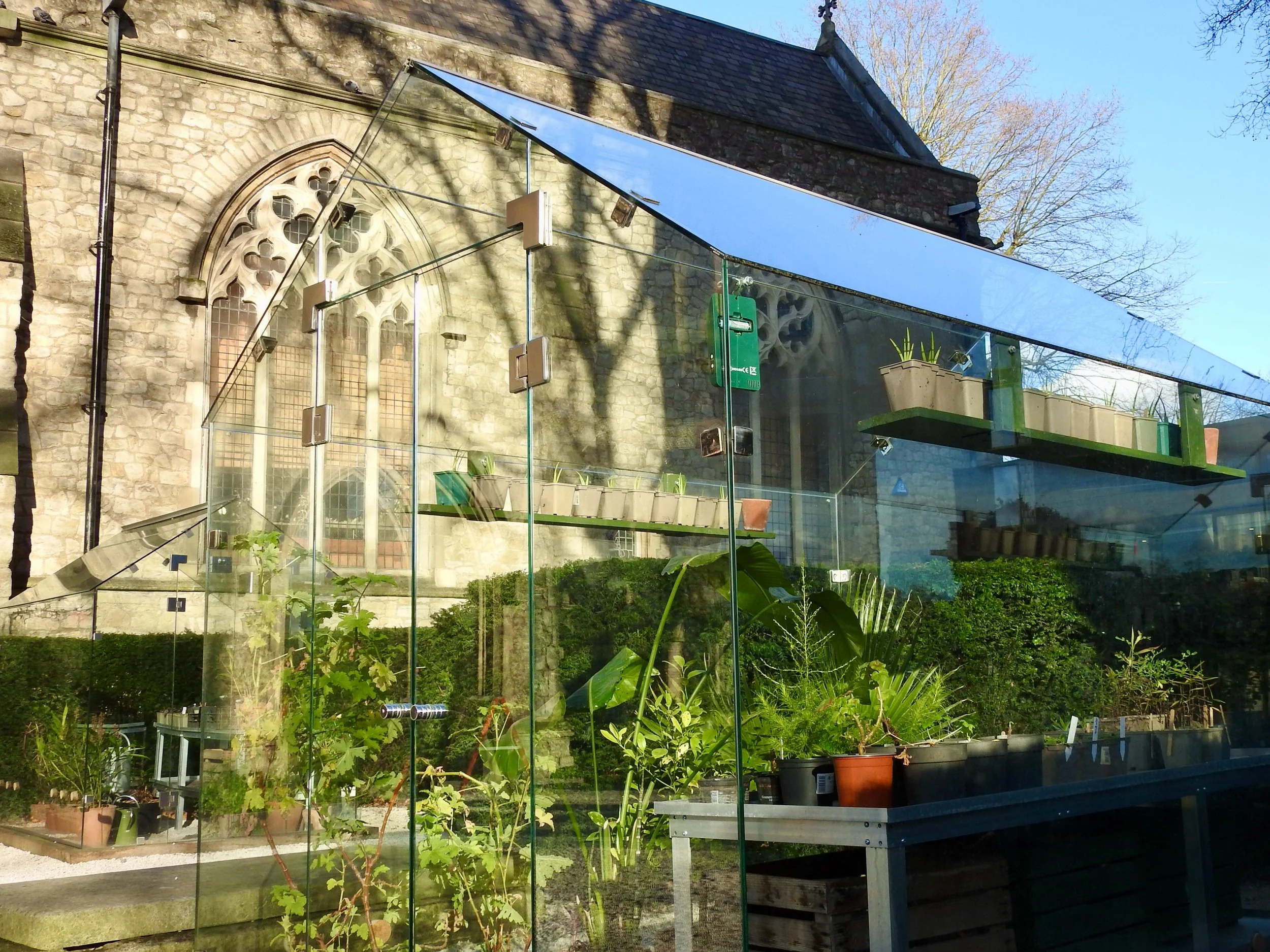
The glasshouses on the forecourt outside St Mary-at-Lambeth church
My own lost London drifts past the train window as we pull through the city suburbs. A fox sleeps on a sunny bank outside Raynes Park, where I worked in the wetland centre café. Hello Wandsworth, where I worked as an RSPB fundraiser. There goes Wimbledon where my old boyfriend lived, and there’s Clapham Junction where I used to wait for my train home to Hampshire, not long before I realised I was not made for city life.
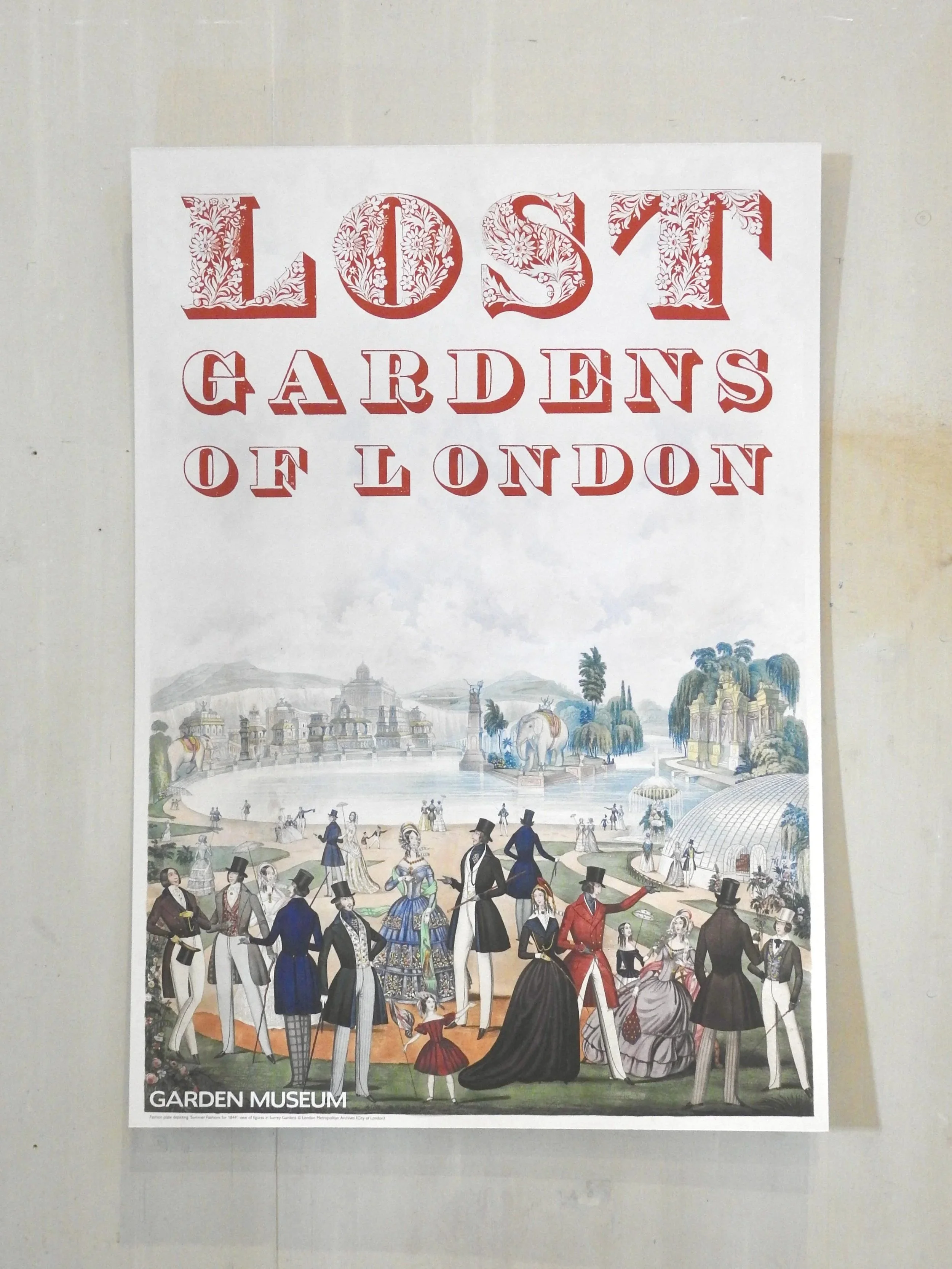
The typography on this poster! Chef’s kiss.
I gave it a go. I did the London thing for nine whole months. My last (and best) city job was a Christmas temp at Fortnum & Mason, dressed in a cool eau de nil uniform that made me look like an air hostess, grinding Jamaica Blue Mountain coffee beans for millionaires and sharing tins of broken biscuits out the back with my fellow peasant co-workers. I came back to London after Christmas, realised I hated it, broke up with my boyfriend (nice guy, bad match), caught the train home to Petersfield and never looked back.
But I always love a day trip to London. Who couldn’t? Watching the tall, crazy buildings fly by as we grind towards Waterloo. So many lives crammed into tiny spaces. Who built those elephant and castle signs at Vauxhall Cross? Who painted the ghost signs above those red-brick terraced streets? Big Ben appears and disappears and reappears again between each glass-fronted apartment block.
I usually head over the river after leaving Waterloo station, but today I’m staying in Lambeth. The sun is shining and January, the month of a thousand months, is almost at an end. I walk past a mural of Paddington Bear, a line of high-vis school kids, a Polish kitchen, a sightseeing bus, a hot cop in a stab vest and an inevitable Gail’s. In Archbishop’s Park there are parakeets, crocuses and a cluster of beehives behind a chain fence. A military chopper drifts overhead.
And as the path curves round to meet the river, I see the Houses of Parliament framed by palm trees, which is appropriate because (and I will die on this hill) there is nothing more depressing than seeing palm trees in the UK. They remind me of seaside resorts at low season and they are just so sad.
At last I arrive at the Garden Museum, a collection of people, plants, ideas and artefacts housed in a beautiful old church next to Lambeth Palace. I step into the cool, quiet space of the exhibition on London’s lost gardens and green spaces which started last autumn.
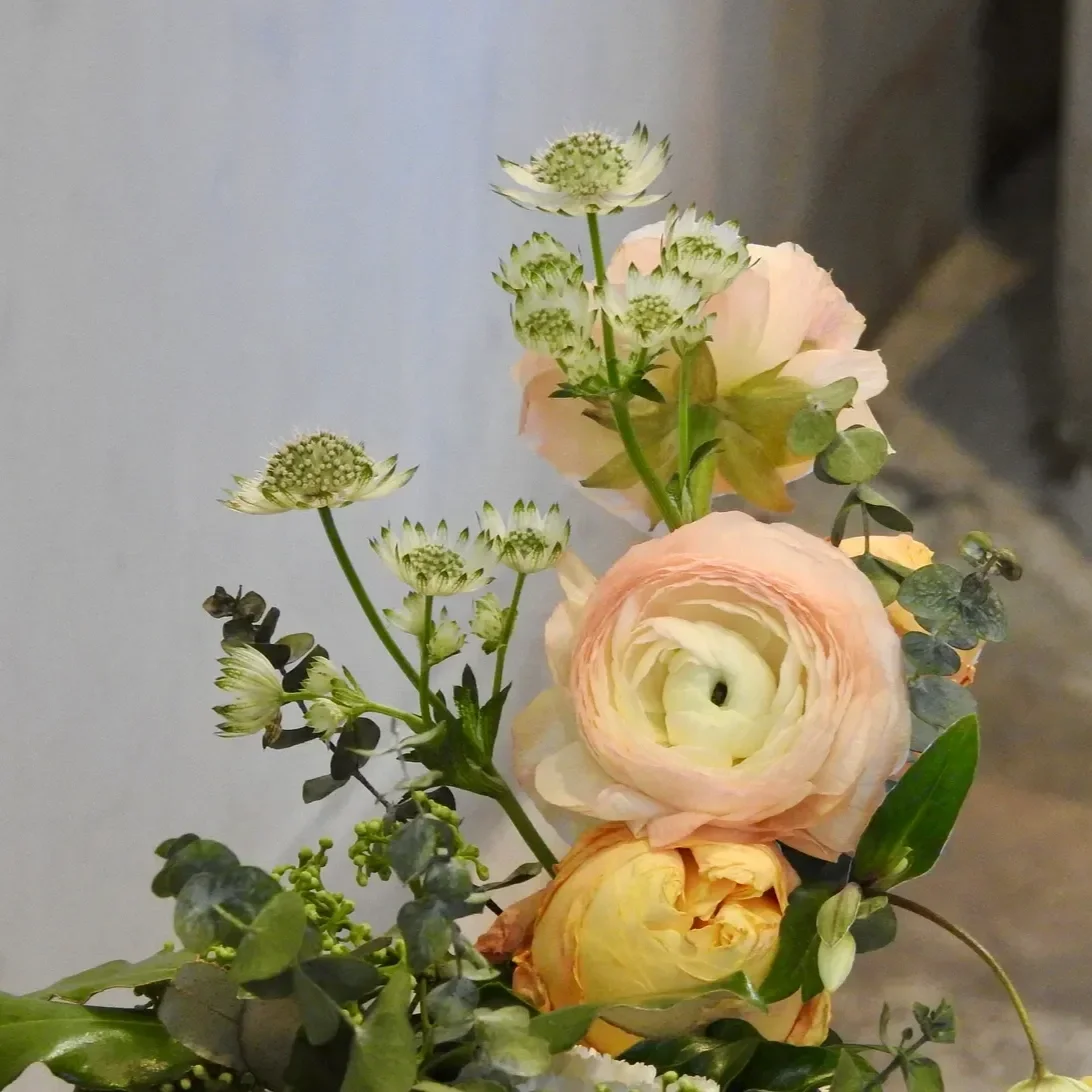
Cut flowers arranged in the museum atrium
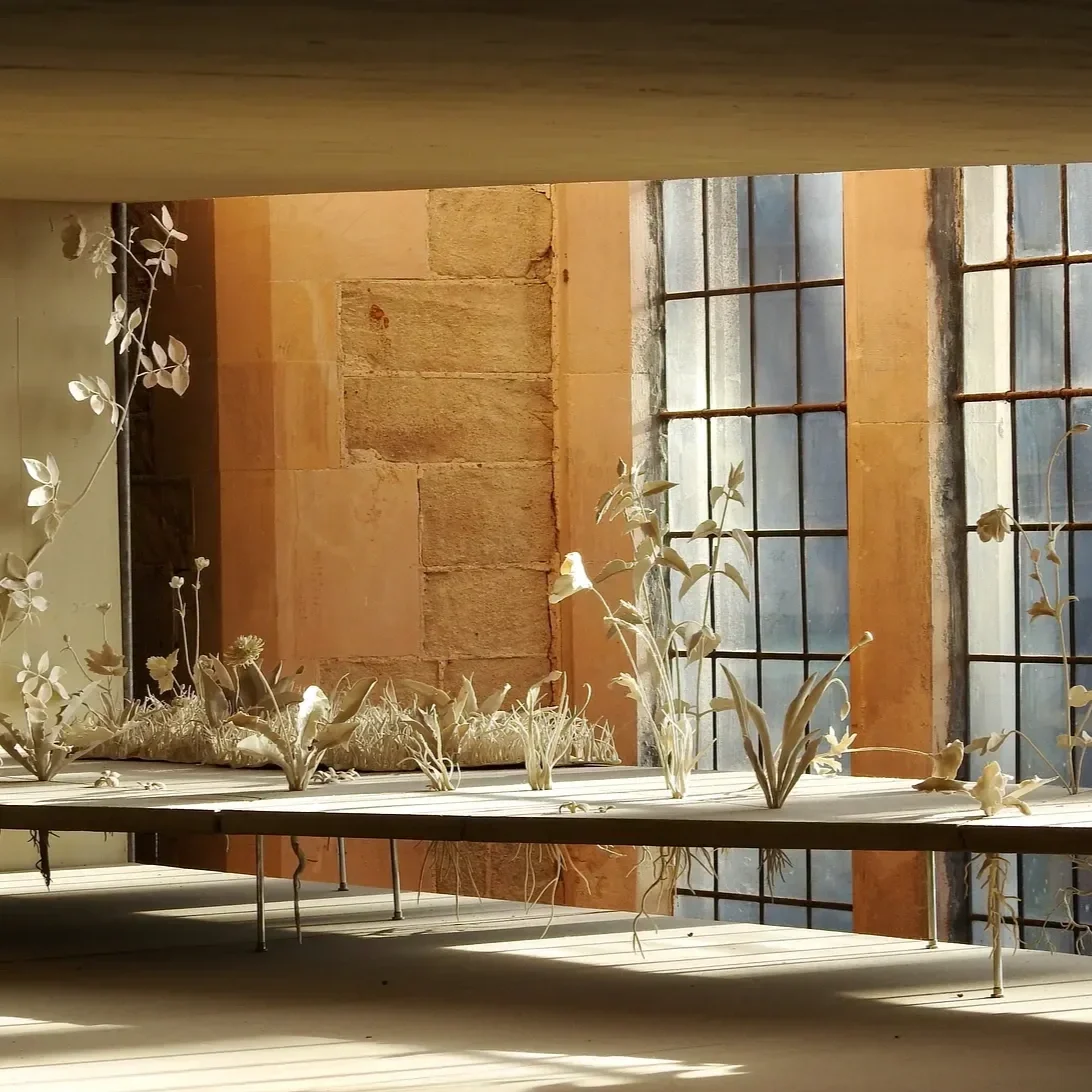
Installation in the museum window (I forgot to write down the artist, soz)
I was drawn to the Garden Museum’s latest exhibition because of my love for manmade spaces, buildings and objects that have been abandoned, neglected, lost in time and reclaimed by nature. Industrial archaeology sites like Chilworth Gunpowder Mills in Surrey. Empty factories like the Shoreham Cement Works on the A283. Fragments of decommissioned train track from the Longmoor Military Railway. Victorian follies and sundials in Sydenham Hill Wood. There’s something hauntingly delicious about watching these old spaces fade away, slowly recolonised by rain and moss.

Signed photos from the permanent collection. I was a BIG Ground Force fan when I was a kid, double billed with Changing Rooms, of course.
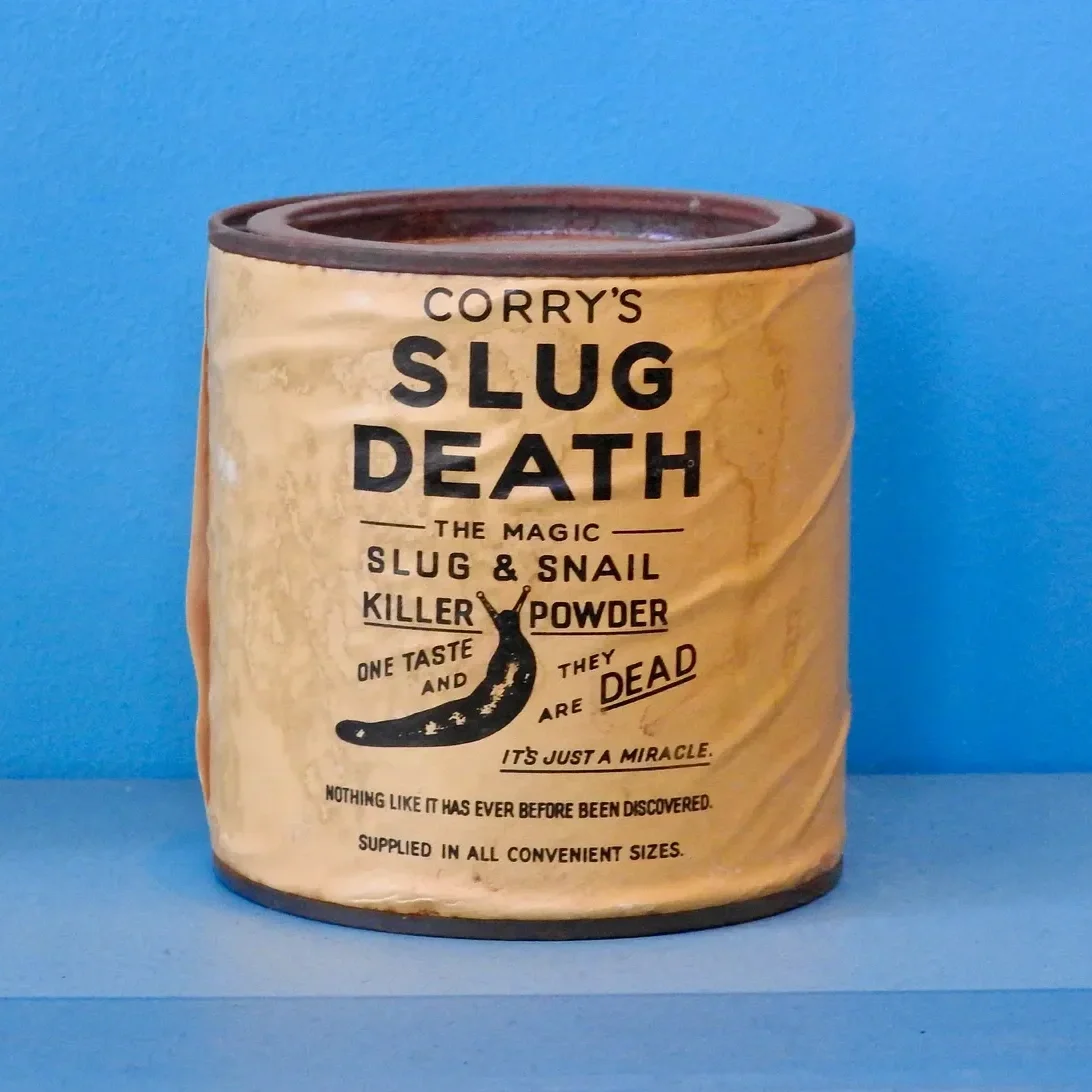
The stuff of ecological nightmares.
Sipping perfectly sour, marble-topped coffee in the museum café, I listen to the sirens outside and feel cosy and snug, protected from the city in this medieval sanctuary. I read my book, listen to the conversation at the next table, watch through the glass as shadows sweep over the courtyard garden.
A day in London is always just one day for me, now. I am already looking forward to being back in my own garden, where the miscellaneous bulbs I planted last autumn are starting to spring up from the soil. There are tufts of brushed out dog fur caught in the bushes, with which I hope the birds might line their nests. The garden chairs are waiting to come out from the shed, and there are new seeds waiting to be planted.
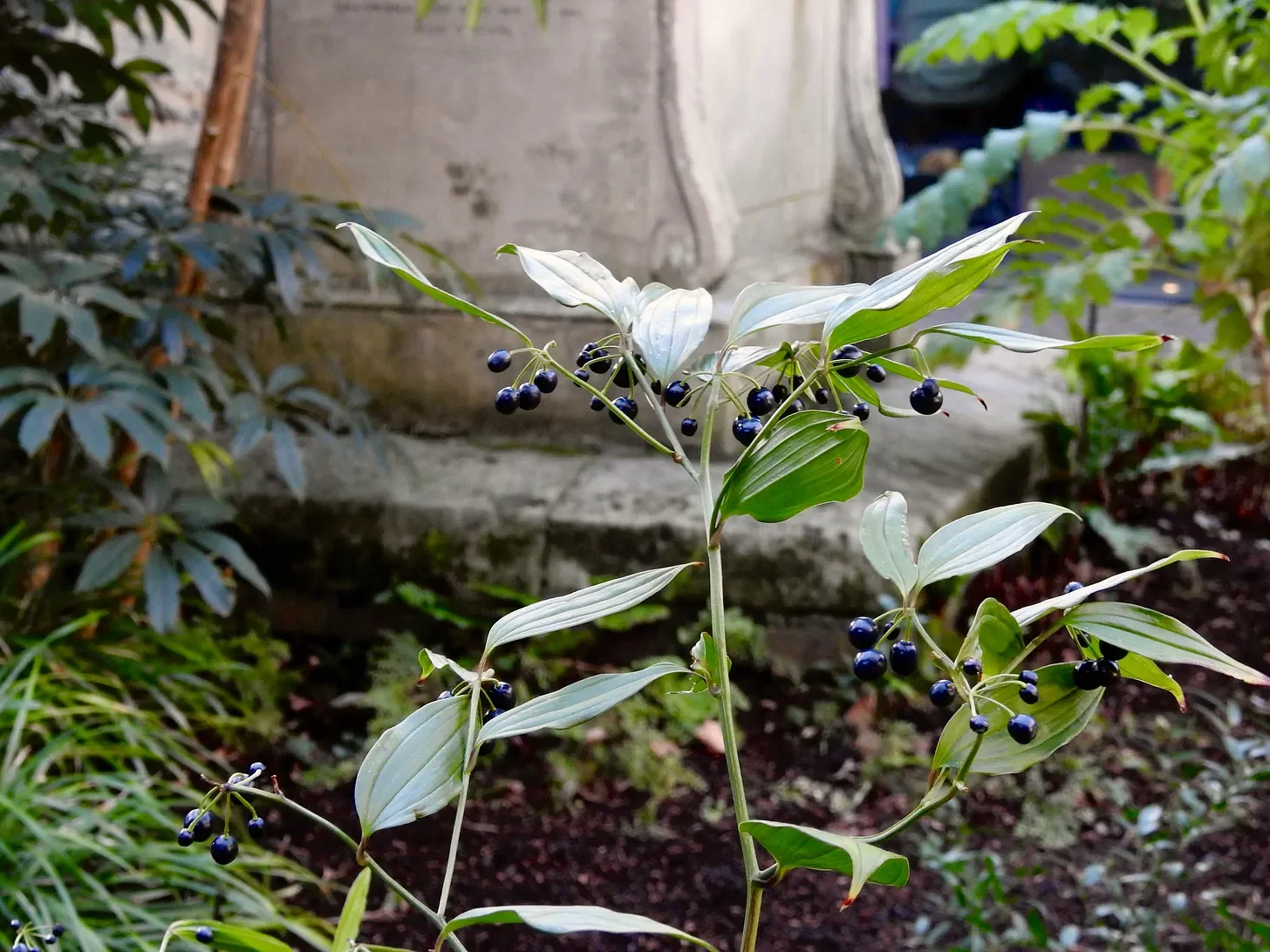
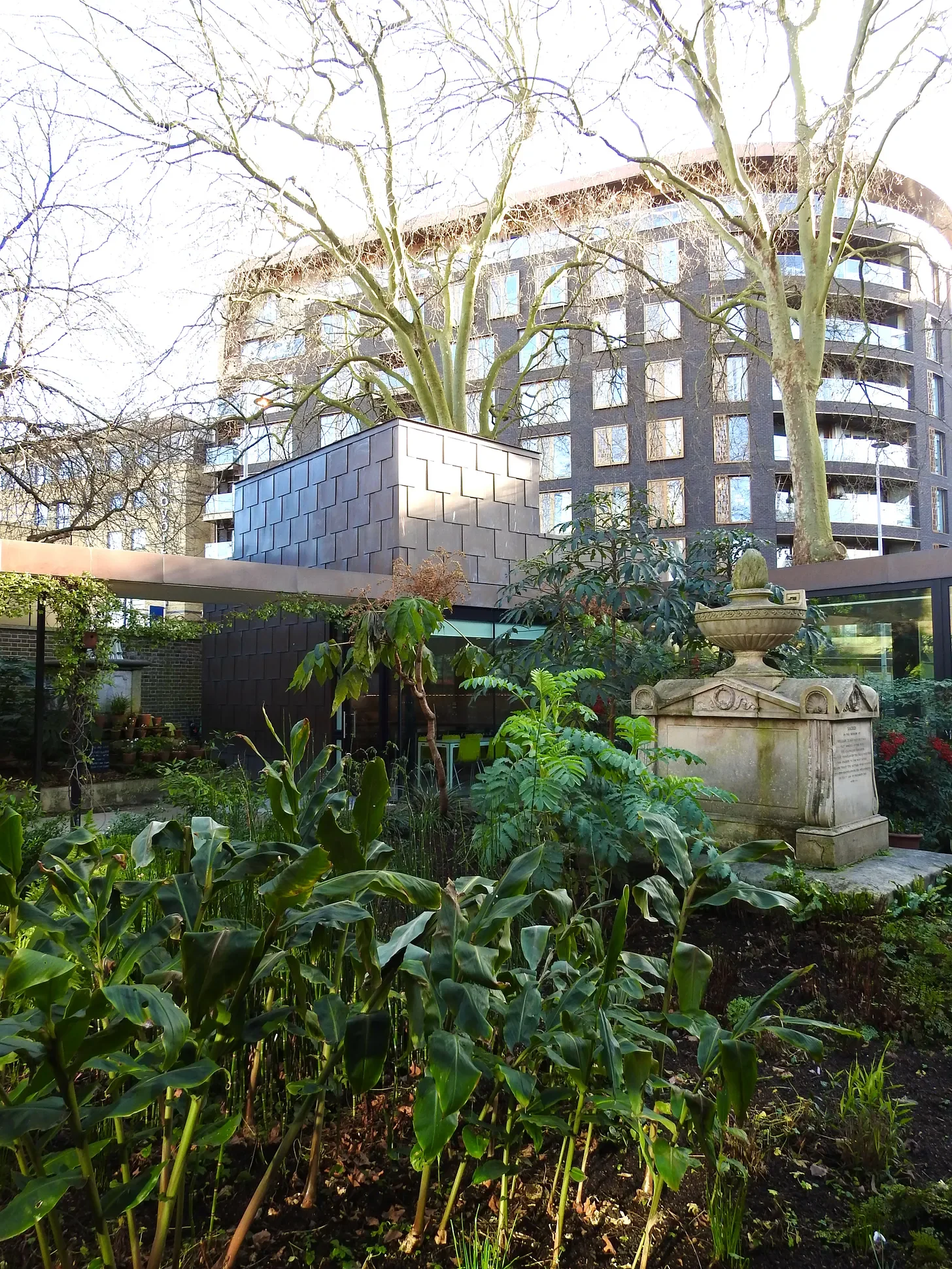
The Courtyard Garden at the heart of the museum
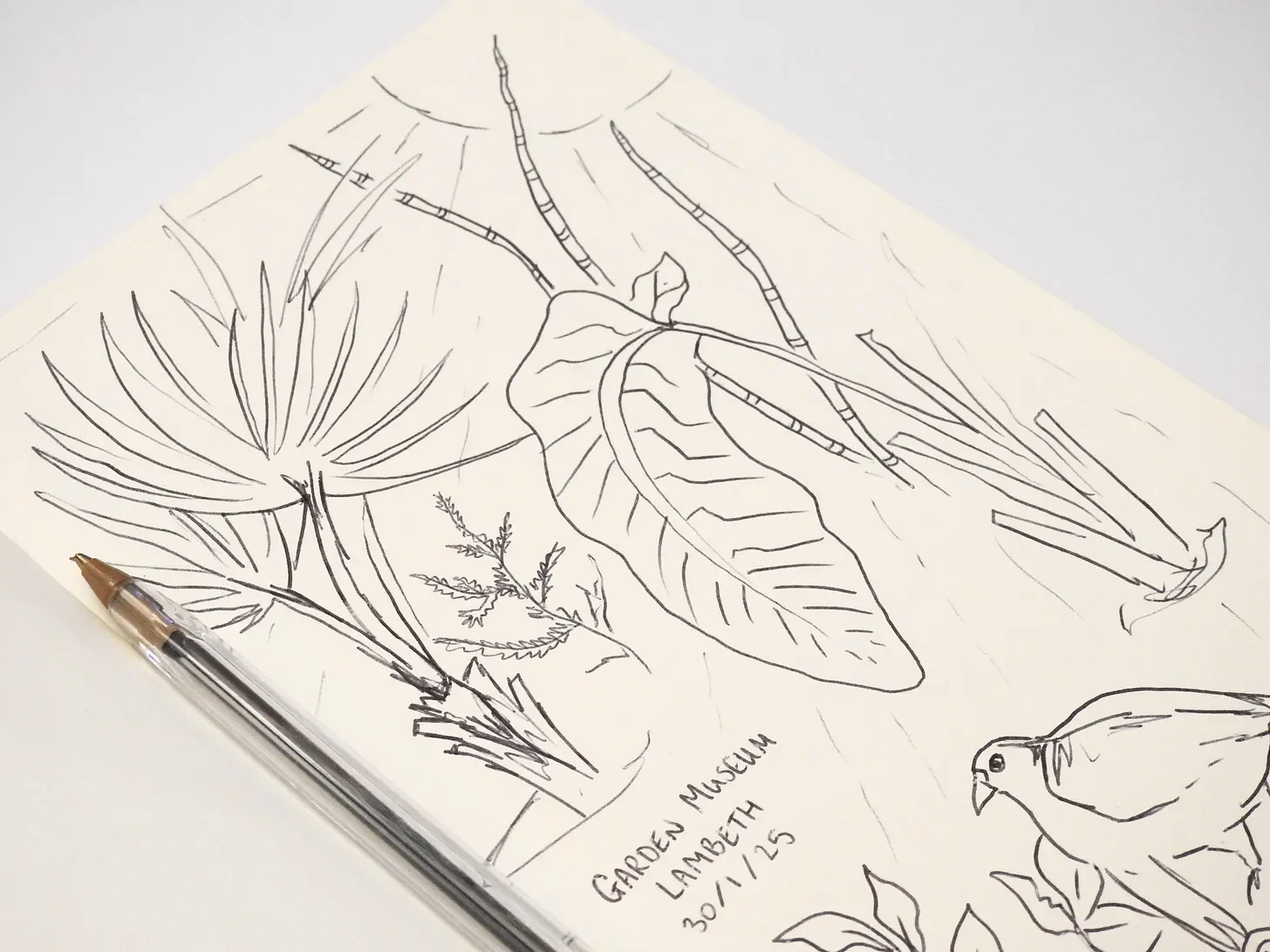
Banana palm and pigeon sketches from the forecourt
My 5 Favourite Gardens from the Exhibition
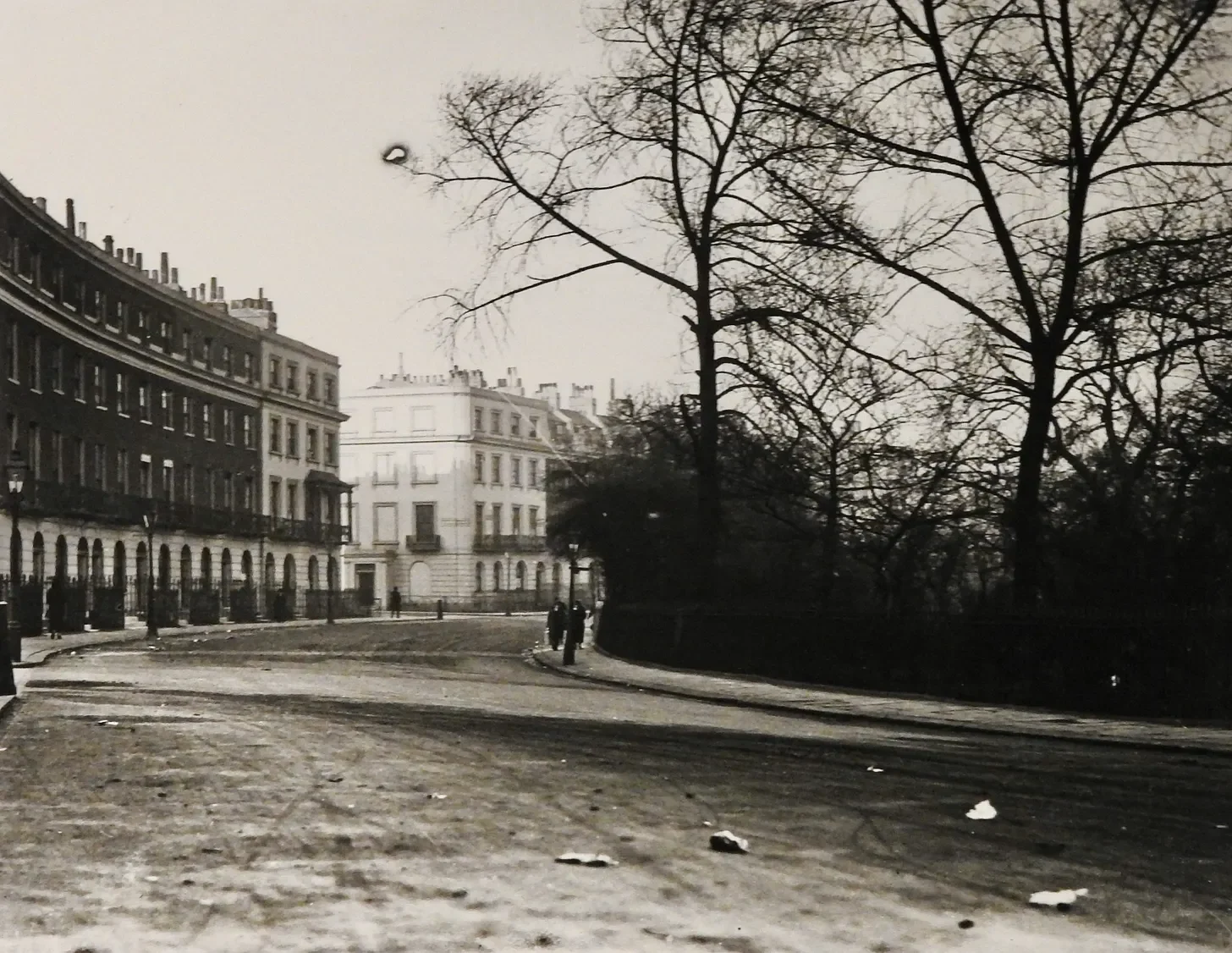
Mornington Crescent, 1924
To the right of this photograph is the enclosed community garden, first laid out in the 1820s when the Mornington Crescent estate was created for the prosperous middle classes. In 1919 the gardens were sold to a developer, and within a decade they had been redeveloped into the now iconic, art deco building of the Carreras Cigarette Factory, replete with tacky Egyptian-Revival-style architecture. The complete destruction of this communal garden was so divisive that it led to the appointment of a Royal Commission on London Squares to help protect the city’s open spaces.
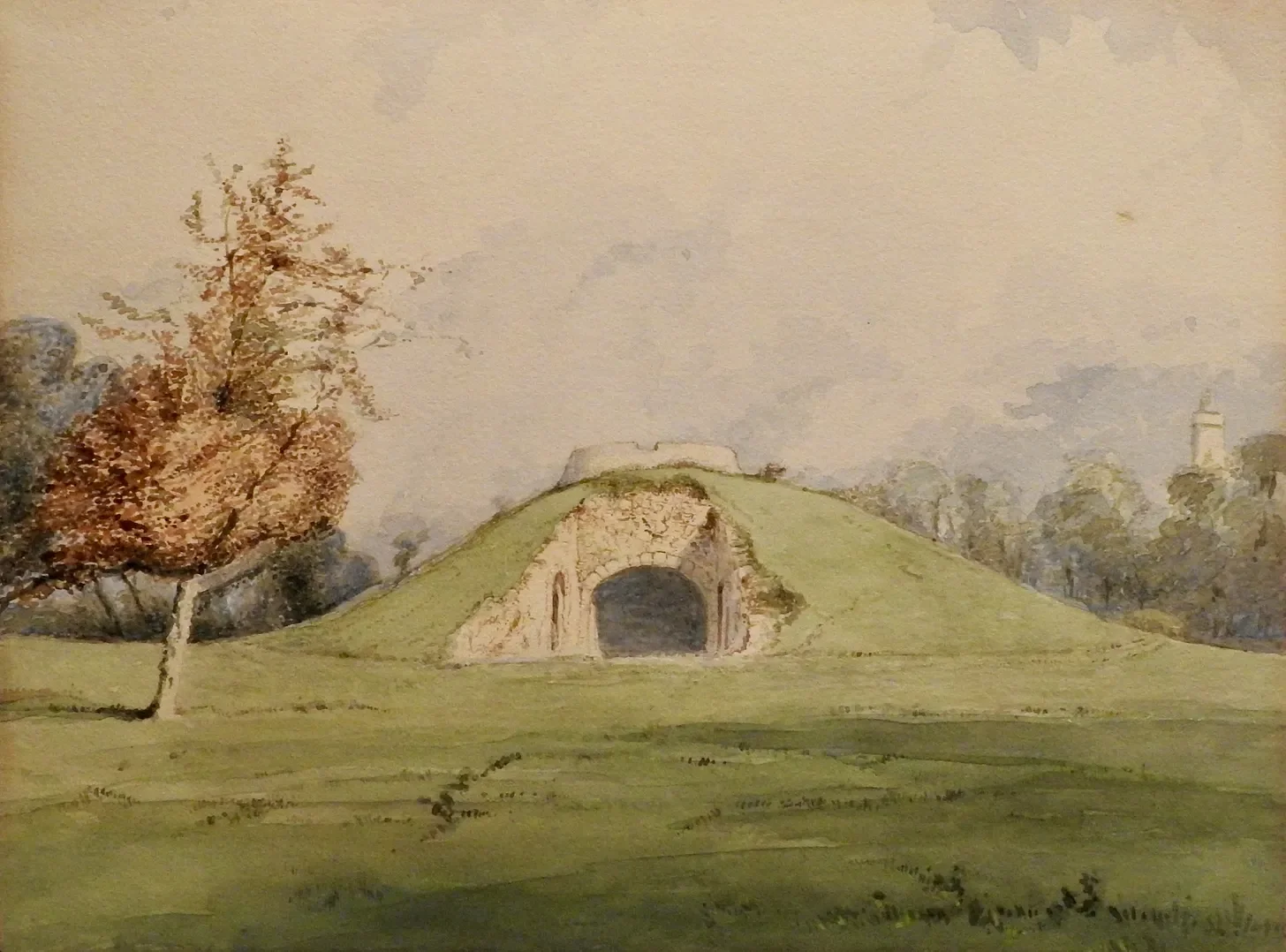
The Lion’s Den at Earl’s Court, 1874
In 1764, the surgeon John Hunter bought a piece of land opposite what is now the east entrance of Earl’s Court tube station. Obsessed with anatomy and physiology, he turned it into a menagerie with animals roaming the garden and live eagles chained to conifer tree rockeries. In the meadow at the east end of the grounds, he raised an artificial mount known as the ‘Lion’s Den’, where he kept his fiercest animals. He also built a miniature rampart on the top, from where he would shoot his gun to deter intruders. The garden was destroyed and redeveloped in 1886.
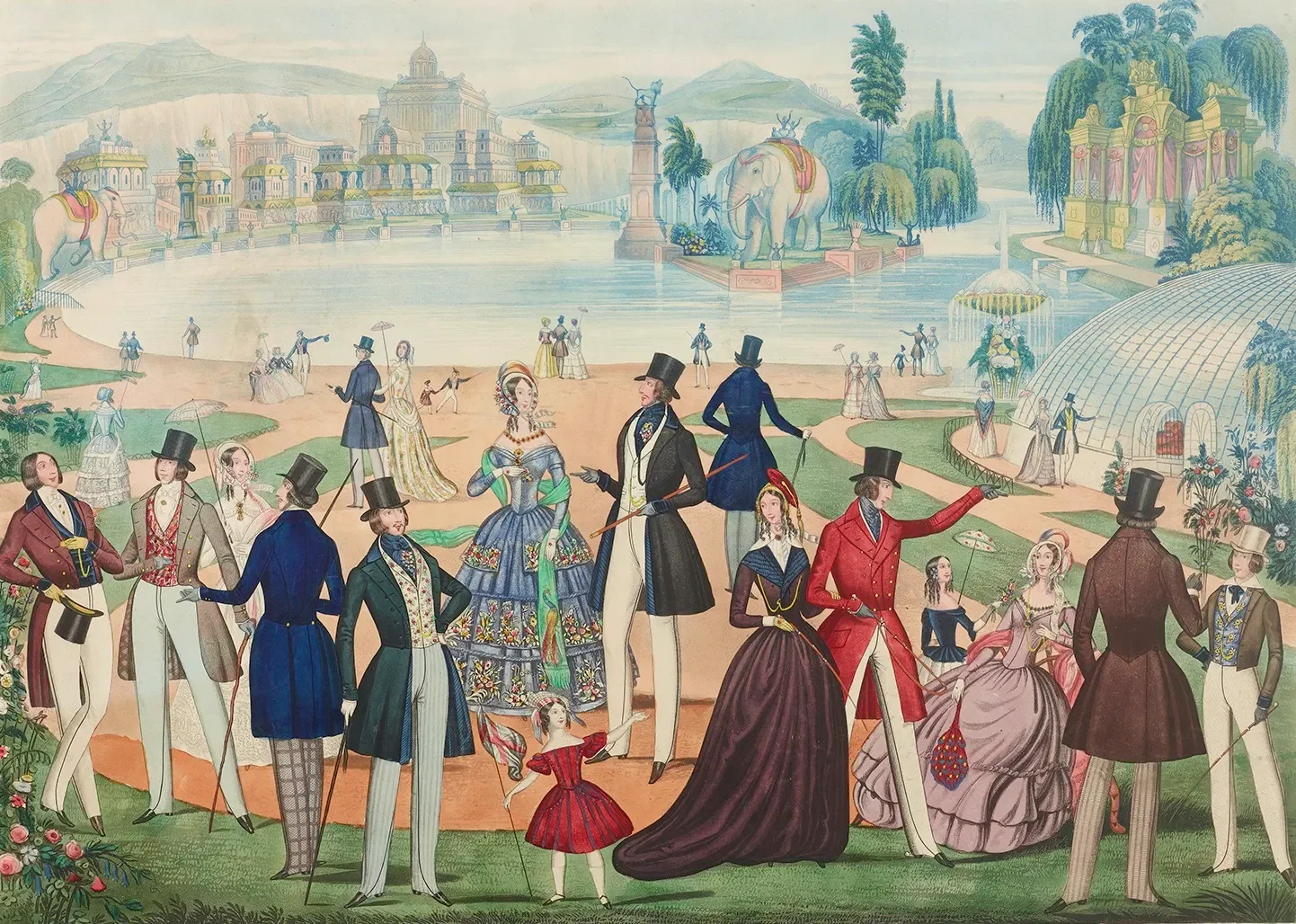
Surrey Zoological Gardens, 1844
Laid out in the grounds of the Manor House in Southwark, this Victorian pleasure park boasted exotic plants and trees, picturesque pavilions and a domed glass conservatory full of lions, tigers, rhinos and giraffes. There was also a lake used to reenact events like the eruption of Vesuvius and the storming of Badajoz, and in 1844 there were even two massive elephants wandering around to entertain the visitors. Spot the pissed off tiger through the door of the glass dome. By 1856, in part due to competition from the Great Exhibition at the Crystal Palace, the zoo had become run down and the animals were sold off.
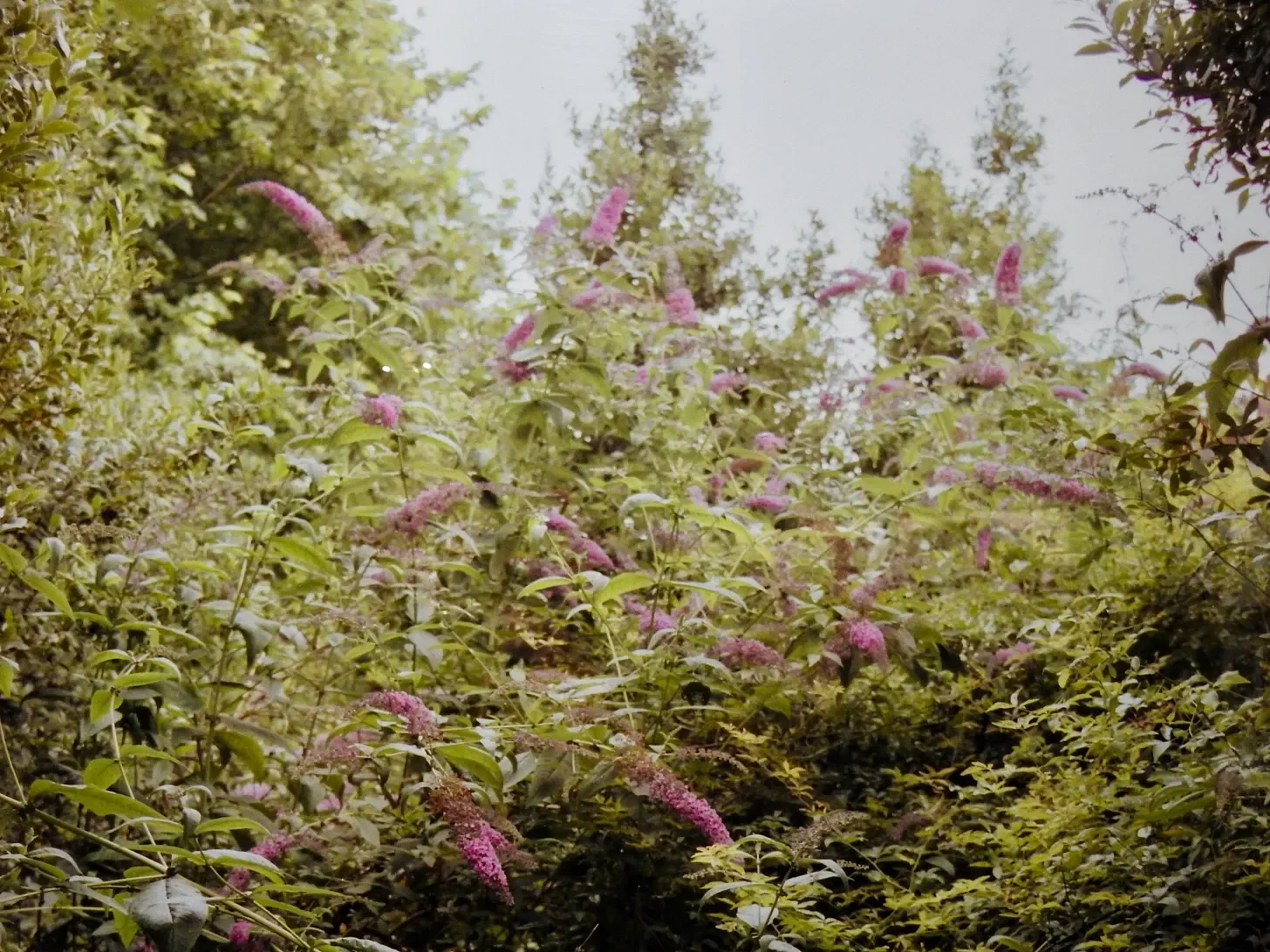
Lucian Freud’s Buddleia
For the painter Lucian Freud, buddleias were symbolic of resilience and resurgence, particularly in the post-war period when buddleia trees grew out of the ruins of bombed sites and disheveled back gardens. In his own Notting Hill garden, a self-seeding buddleia was allowed to take centre stage until it became an ‘impenetrable thicket’. It would go on to feature in many of his paintings. When he died, he left his house to a friend who recast the garden in his own interest and style.
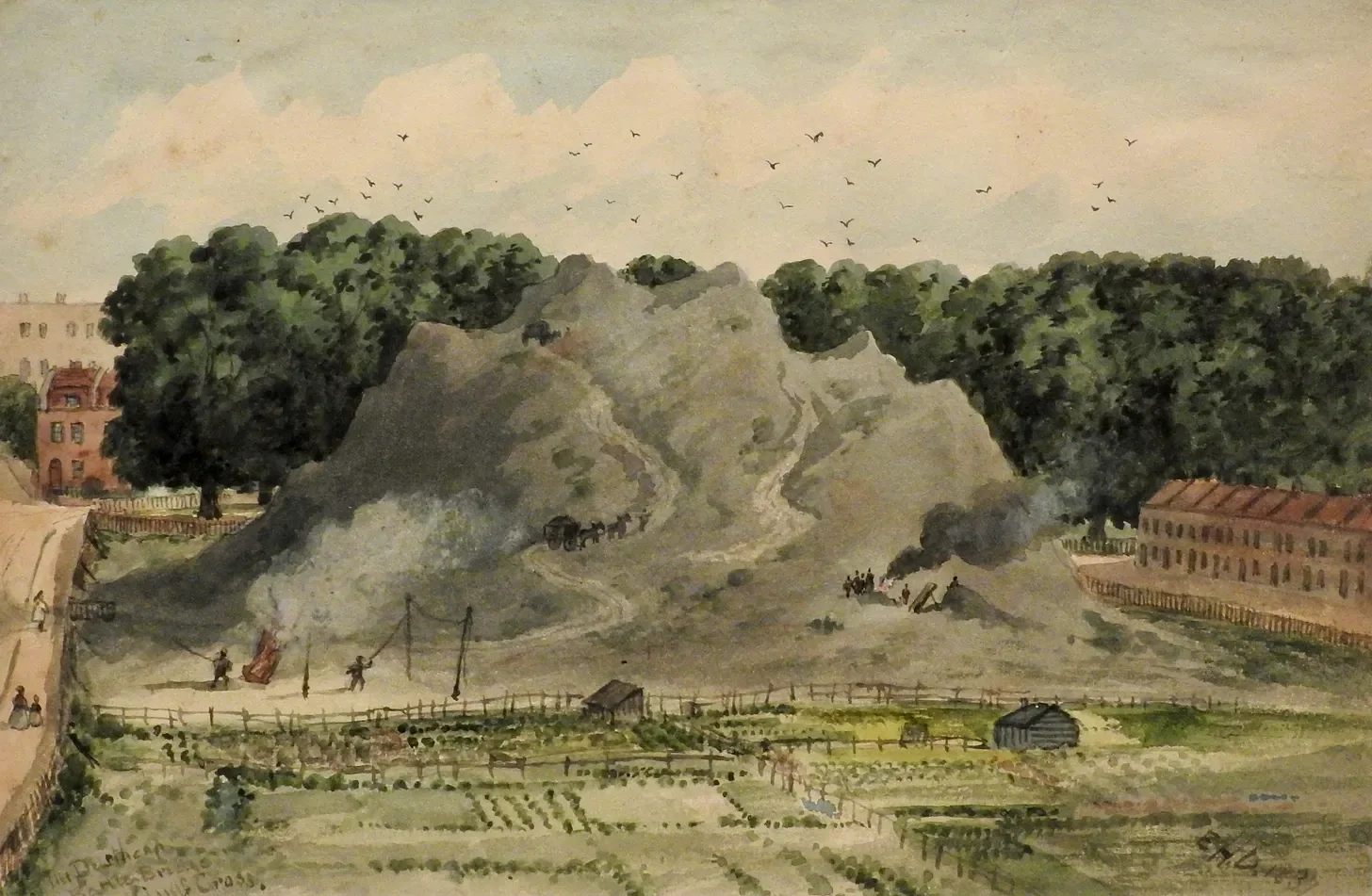
Smith’s Dust Heap, 1837
One of the most notorious artificial mounts ever created in London, this was a mountain of filth and cinders that towered over Gray’s Inn Road by King’s Cross Station. It doesn’t quite count as a garden, but it was definitely a significant landmark of the Regency period, believed to have stood on the same spot since the Great Fire of London in 1666. By 1848 it had been bought and removed in its entirety by the Russians to help make bricks to rebuild Moscow.
If you enjoyed this post…
The exhibition is now closed, but you can still buy the accompanying book written by the guest curator, landscape architect and historian Dr Todd Longstaffe-Gowan.
My friend Matt is the head gardener at the Garden Museum, as well as an author and all round nice guy. Here’s his website and Instagram.
If you love hunting for relics, abandoned places and urban curiosities, I highly recommend the book Curious London by Jack Chesher.
