I just finished reading 1929: Inside the Crash by Andrew Ross Sorkin, which is one of my favourite types of book: non-fiction that’s as gripping as a novel. It’s a behind-the-scenes look at the events leading up to the Wall Street Crash of 1929 and the early 1930s, and how politicians and business titans were trying to reconcile the need to prop up the American economy while keeping their own pockets full. It’s a really great, well-researched book full of unquenchably avaricious characters, but the main reason I enjoyed it so much was because it has fuelled my deepening obsession with the rise and fall of America, and specifically the history of Wall Street.

Wall Street, how do I love thee? Let me count the ways.
I’ll begin with the obvious - I don’t approve of Wall Street. At best it’s glorified gambling, and at worst, it’s just a really soulless way to earn a living. I love Wall Street in the same way I love true crime and cult documentaries - with morbid fascination. And I have a sadistic interest in the crashes because it’s like watching capitalism fail in slow motion.
‘The only trouble with capitalism is capitalists; they’re too damned greedy.’
President Herbert Hoover
I’m fascinated by the waves of people who have been drawn to Wall Street since the first stock was traded there in 1792. The impact of big investments in the early days, the normalisation of debt and risk, the yuppies with their filofaxes and Roladexes. And then the big crash of 2008, which I barely remember despite being a teenager, because I had no concept of economic ripples. It wasn’t until I watched The Big Short that I became interested in the mechanics of this mad, high-finance world, and how the movement of other people’s money can infect and hypnotise people.
Three of my favourite books I’ve read about Wall Street:
The Bonfire of the Vanities by Tom Wolfe (1987) - A satirical novel following three New York characters as they navigate the collision of race, class, media frenzy and political corruption of the 1980s. A chunk of a book but it’s super gripping.
Liar’s Poker by Michael Lewis (1989) - Lewis is the author of the original book on which The Big Short was based, as well as a huge backlist of non-fiction books about business and finance. Liar’s Poker is about his short-lived experience as a bond salesman in the late 80s.
Too Big To Fail by Andrew Ross Sorkin (2009) - A different take on the 2008 story by the same author as 1929. This one’s from the perspective of the leaders of the big financial institutions, and how they dealt with the unfolding crisis.
And a couple of great films, with honourable mention to The Wolf of Wall Street, which I like but don’t love:
The Big Short (2015) - My near-favourite film of all time, second only to Lord of the Rings: Return of the King. A crisp, funny introduction to subprime mortgages, CDOs and other banking terms I never thought I’d care about, and the people who predicted the 2008 crisis.
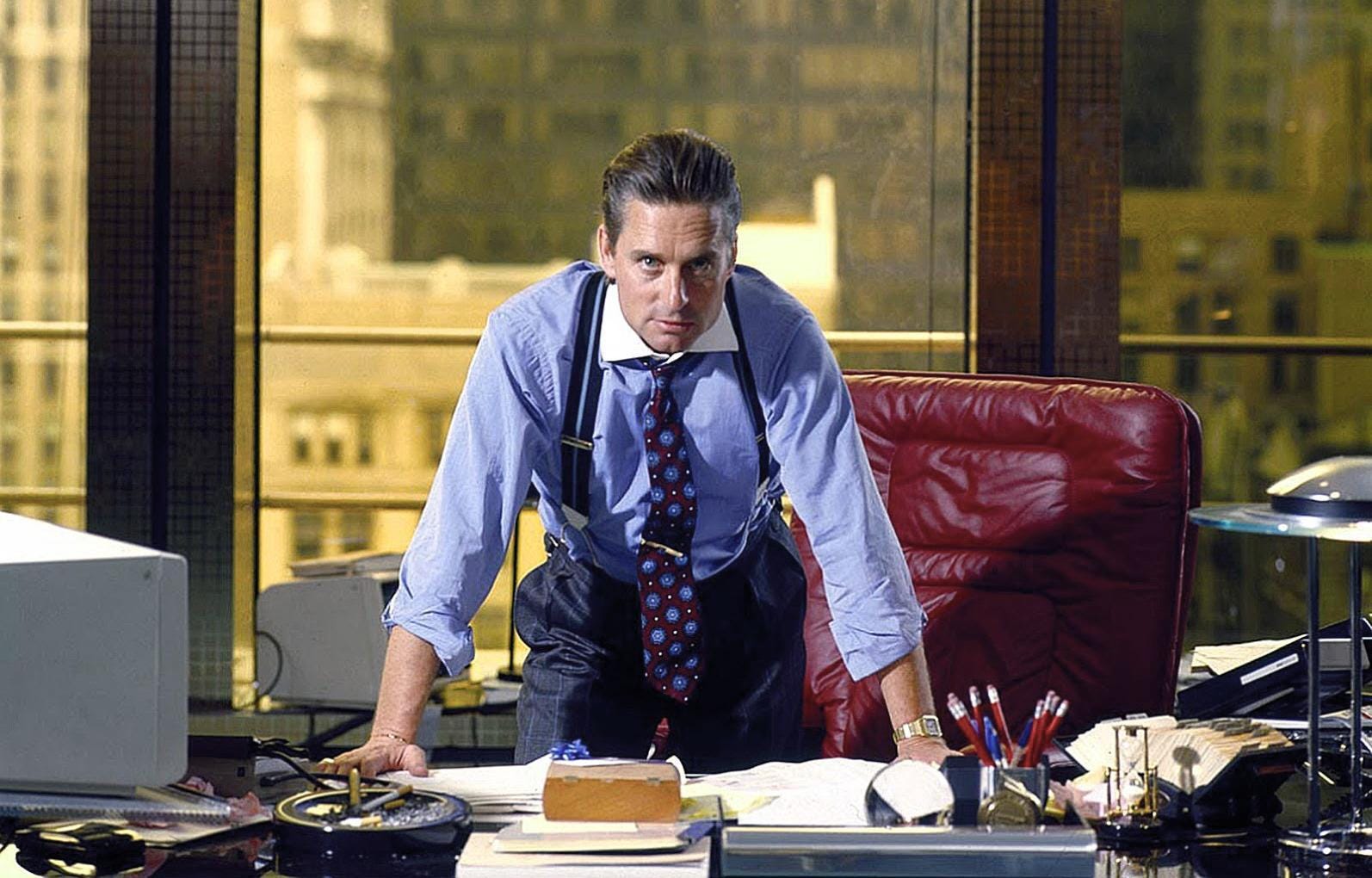
Wall Street (1987) - The first time I understood the sex appeal of Michael Douglas. A morality tale about the dangers of chasing easy money, and ‘living off the buying and selling of others.’
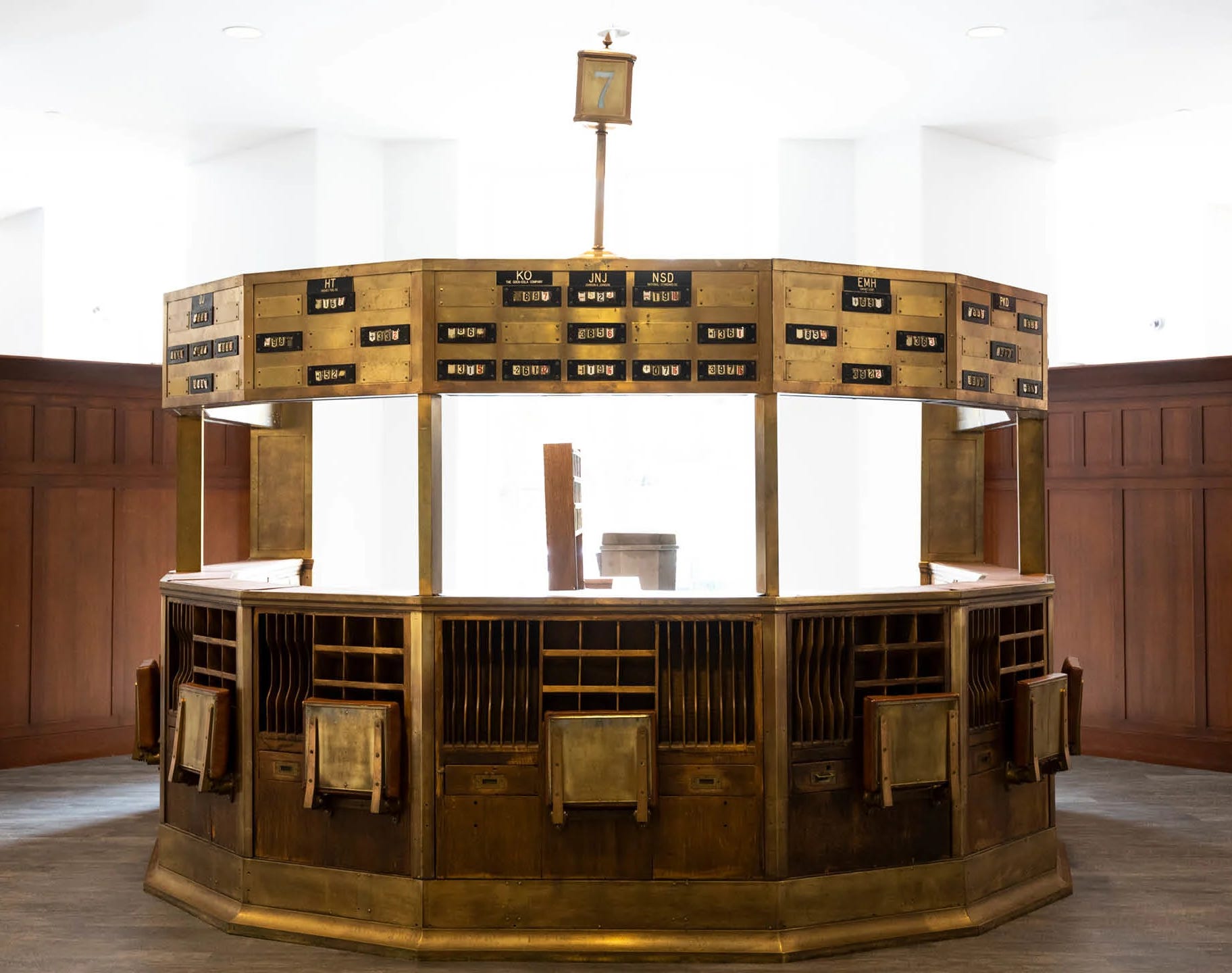
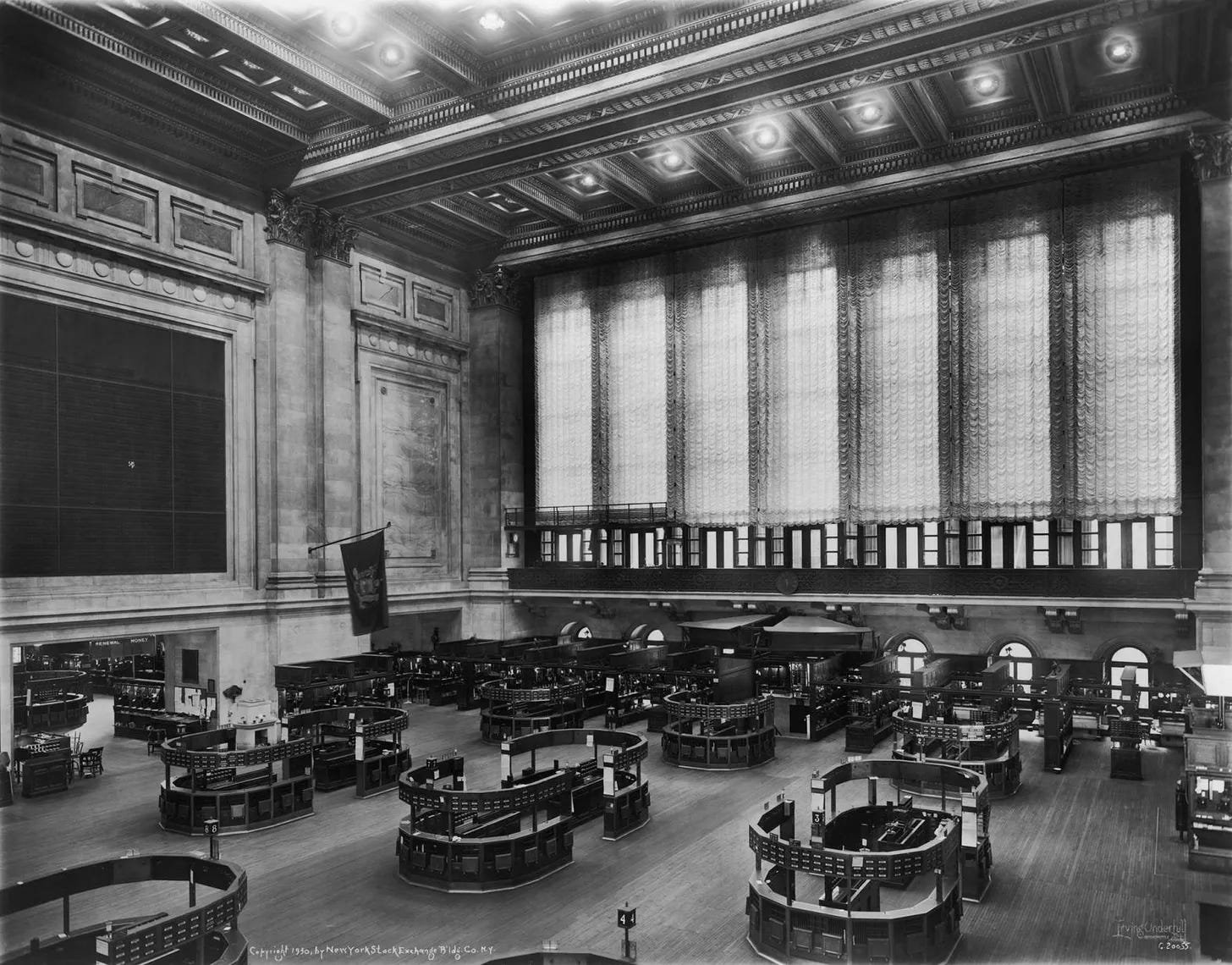
After finishing 1929, I spent way too long researching the New York Stock Exchange floor plan, how the pneumatic tube system worked, and where all the wooden Art Deco trading posts ended up when the Exchange was upgraded in 1981. My investigations so far:
Post 4 is in the Museum of History & Industry in Seattle
Post 5 is at the University of Texas in Austin
Post 6 is in storage at the University of Notre Dame in Indiana
Post 7 is at Emory University in Atlanta
Post 10 was at the Centre of Science and Industry in Ohio, but I can’t find any mention of it after they moved location in 1999. Intriguing!
Post 12 is at the University of Chicago in Illinois
Post 13 is in the National Museum of American History in Washington
Post 15 is at Harvard Business School in Boston
And if any sugar-daddies want to buy me an expensive present for absolutely nothing in return, I’ll have this trading floor telephone for $17,500, please.
I found the animal-themed etymology of trading terms cool:
Bull Market - A rising market trend, named because a bull tosses its horns aggressively upwards into the air. Extreme bull markets tend to precede a bubble burst.
Bear Market - A falling market trend, named after the downward swipe of a bear’s paw.
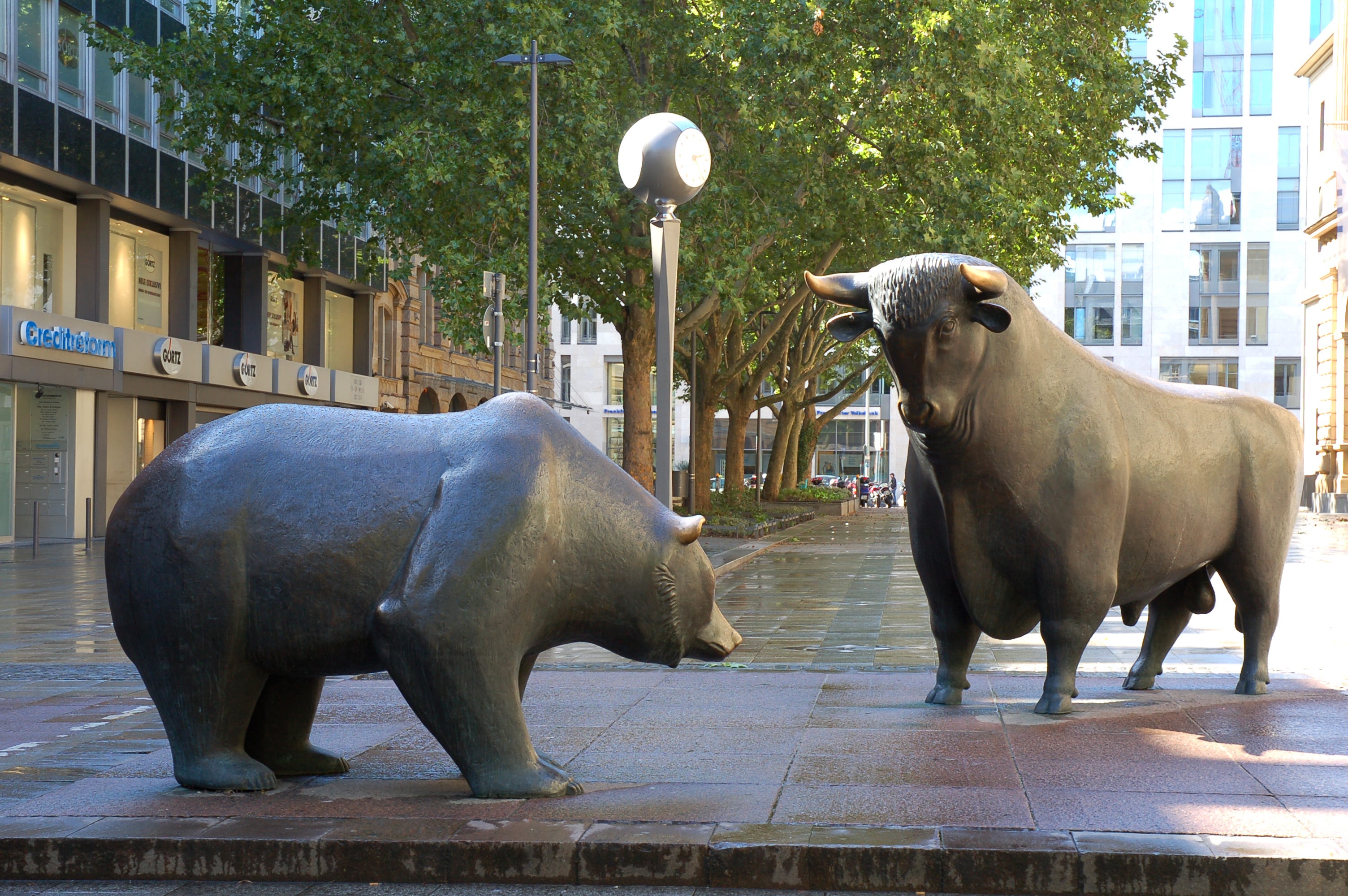
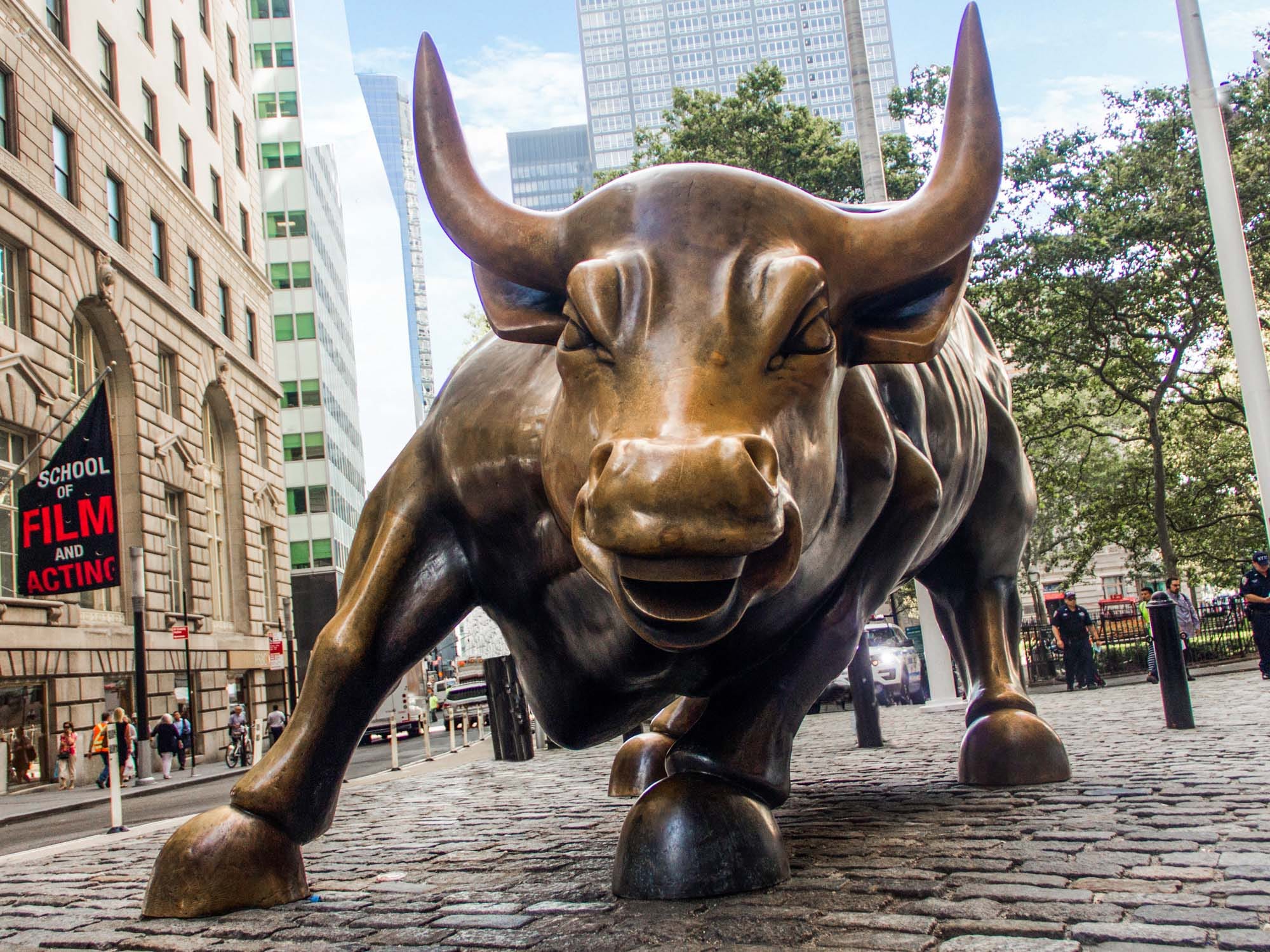
The Charging Bull sculpture on Broadway was unveiled in 1989 as a symbol of financial optimism and prosperity. It was inspired by two bear and bull sculptures placed outside the Frankfurt Stock Exchange in 1985, symbolising the natural highs and lows of the global market. Interesting that the US version only includes the bull. Good vibes only!
I tried taking an interest in the London Stock Exchange because it’s an hour and a half from my house and much easier to obsess over, but it just lacks that garish Gordon Gekko pazzazz. I want lavish Park Avenue apartments, prohibition, zeppelins, junk bonds, cigarettes, Empire State Buildings with phallic antenna.
One day I will make my second trip to New York and visit all the random old buildings in which 1930s financiers used to live and work, and it will be a wild time. For now, I’ll settle for my next literary treasure about the USA: The Power Broker by Robert A. Caro, all about a real estate tyrant who reshaped New York but also ruined loads of people’s lives with uncheckable power. Have I heard this one before..?