All the Ways We’ve Tried to Screw With Stonehenge
We are forbidden to touch the stones.
They are old and covered in rare lichens, the tufts of which flicker in the breeze of the first cool morning after months of heat. There are crows and sheep on the plains, cars creeping along the A303. But we are alone in the circle - far beyond the Great Rope Barrier that has been keeping people at arm’s length since it was introduced in 1977, when increasing visitor numbers started to cause turf erosion and damage to the stones.
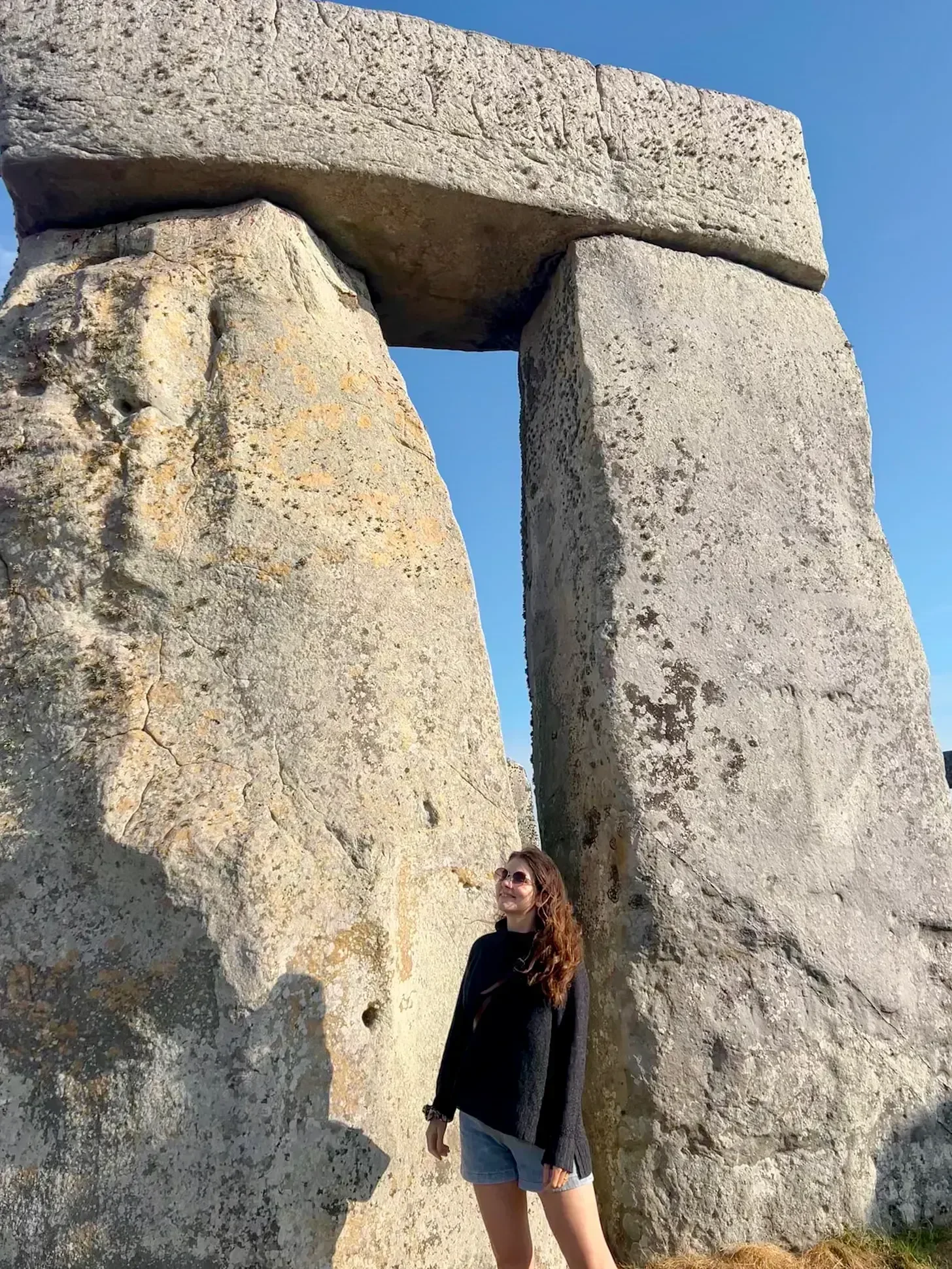
Soaking up the trilithon energy on my trip to Stonehenge in August
In 1985, more than 600 New Age travellers tried to hold their annual free festival at the site, but were stopped en route by hundreds of police officers in riot gear, who smashed vehicle windows, beat people with truncheons, and made one of the largest mass arrests of civilians in modern British history.
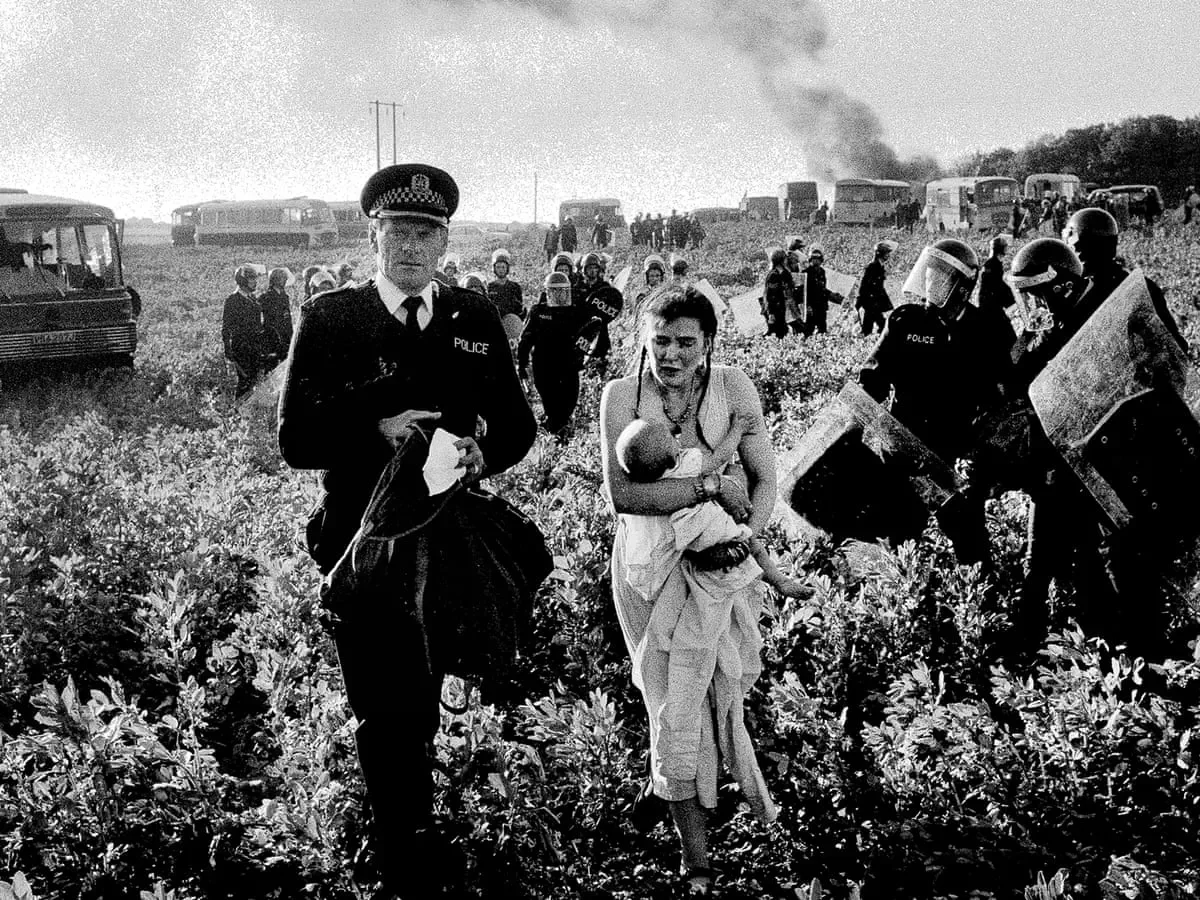
Rose Brash, age 20, being led away during the Battle of the Beanfield, 1985
It came to be known as the Battle of the Beanfield, and marked a brutal end to the spirit of open access that had defined Stonehenge for the last few thousand years, although the restrictions were later ruled unlawful by the High Court. Since 2000, celebrations have been resumed on solstice and equinox dates, with relatively little damage reported.
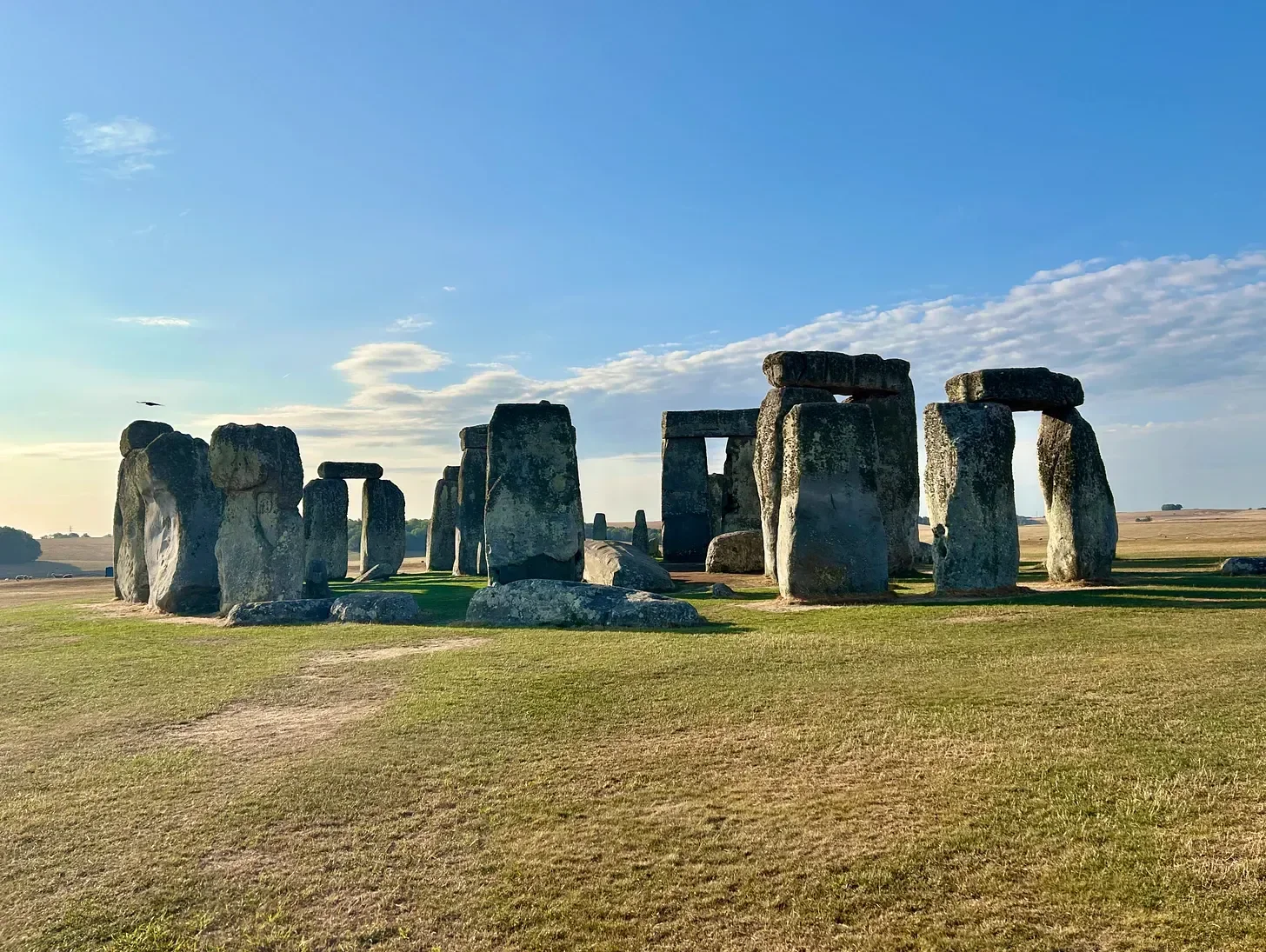
The stones were first brought to the henge around 2,500 years ago
We adore the mystery of Stonehenge. Who built it? What was it for? How did they haul the stones? A thrill, for sure. But the real mystery is not how Stonehenge was made, but how it has not been destroyed. Humans love creating stuff, but my god they love breaking stuff, too. And 2,500 years is a long time to exist on the busy isle of Albion.
But that’s not to say we haven’t tried.
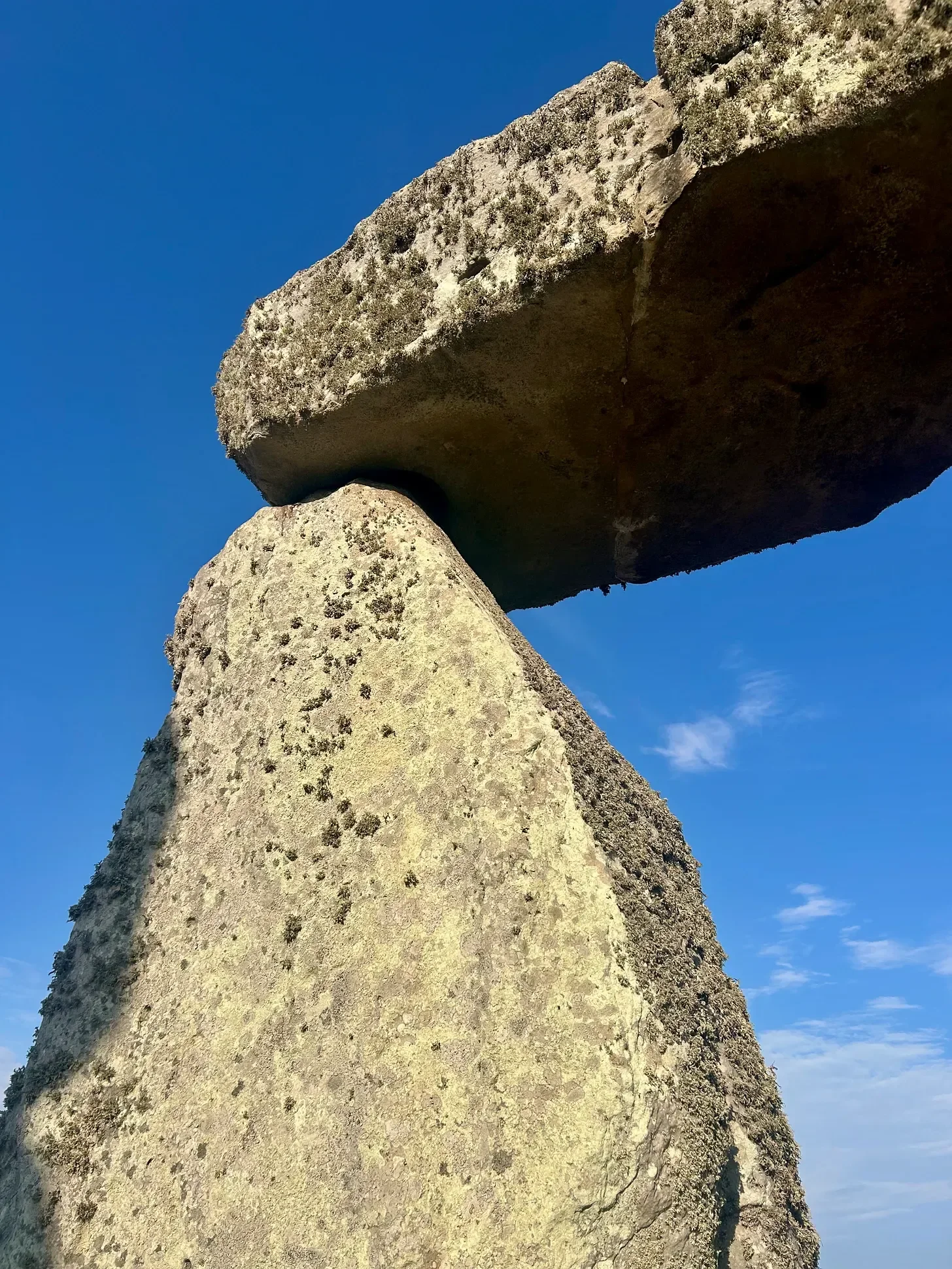
One of the giant sarsen trilithons secured with a mortise and tenon joint
Until the 17th century, stones would occasionally go missing, repurposed to build local bridges or houses. The historian John Evelyn visited the site in 1654 and found the stones ‘so exceedingly hard that all my strength with a hammer could not break a fragment’, while some say the blacksmiths in nearby Amesbury would rent hammers and chisels for passing visitors to chip off their own chunk as a souvenir.
Scattered across the stones are several examples of graffiti from across the centuries, including by the architect Christopher Wren, who lived near Stonehenge in the 17th century. You can find the name WREN carved on Stone 52, and at the bottom of Stone 53, you’ll find carvings of flanged axes and daggers dating back to the Middle Bronze Age.
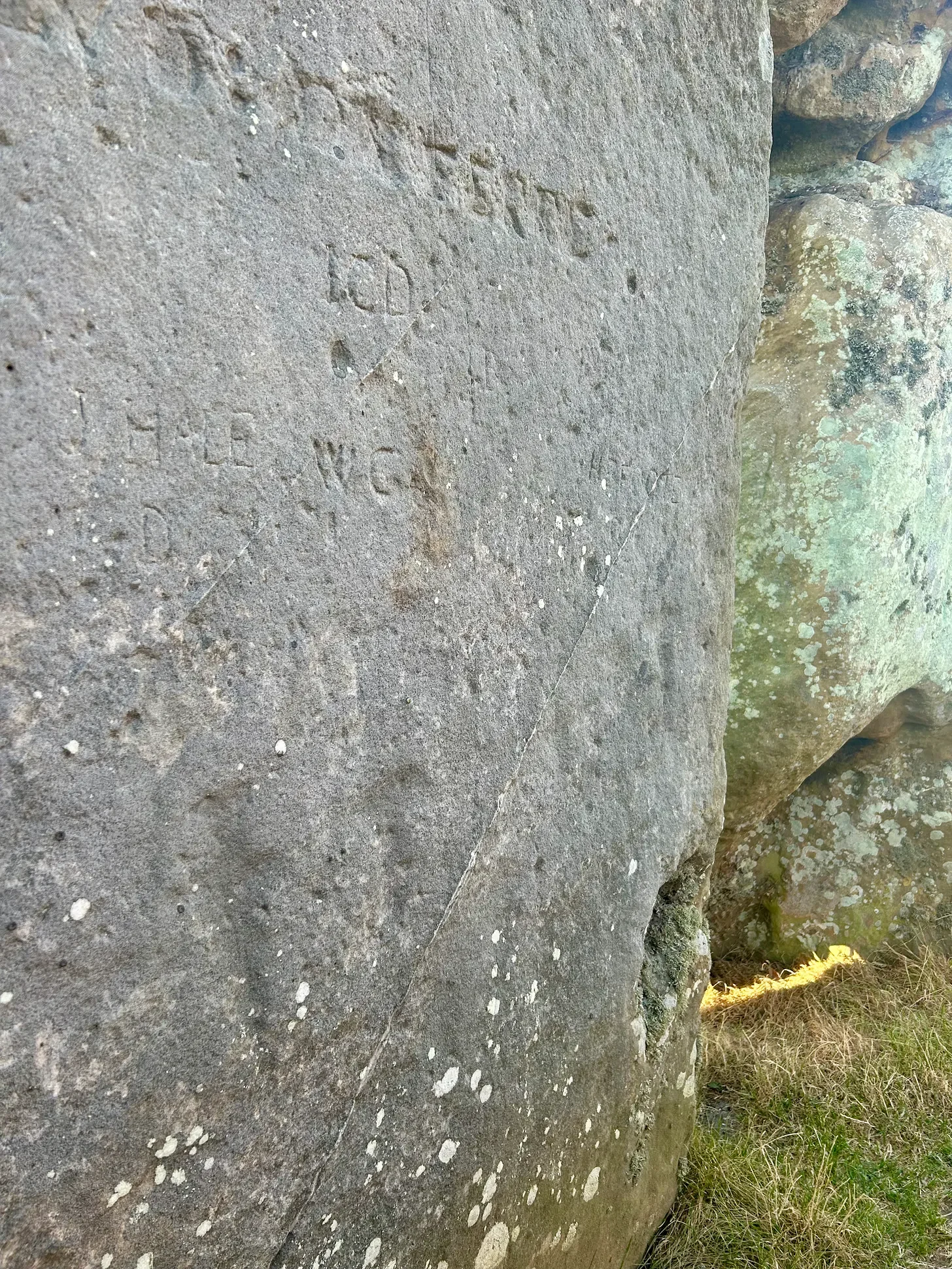
The two largest dagger shapes in the bottom left quadrant of this photo
The configuration of the stone circle changed a few times in the first few hundred years after it was erected, but it wasn’t until the 20th century that conservationists really started moving stuff around - more so than at any time since the Bronze Age.
For generations, Stonehenge had been a twisted ruin, with most of the stones collapsed, half-sunk or leaning over. In the name of stability and order, this more ‘romantic’ remnant of the monument was reconstructed and secured for posterity.
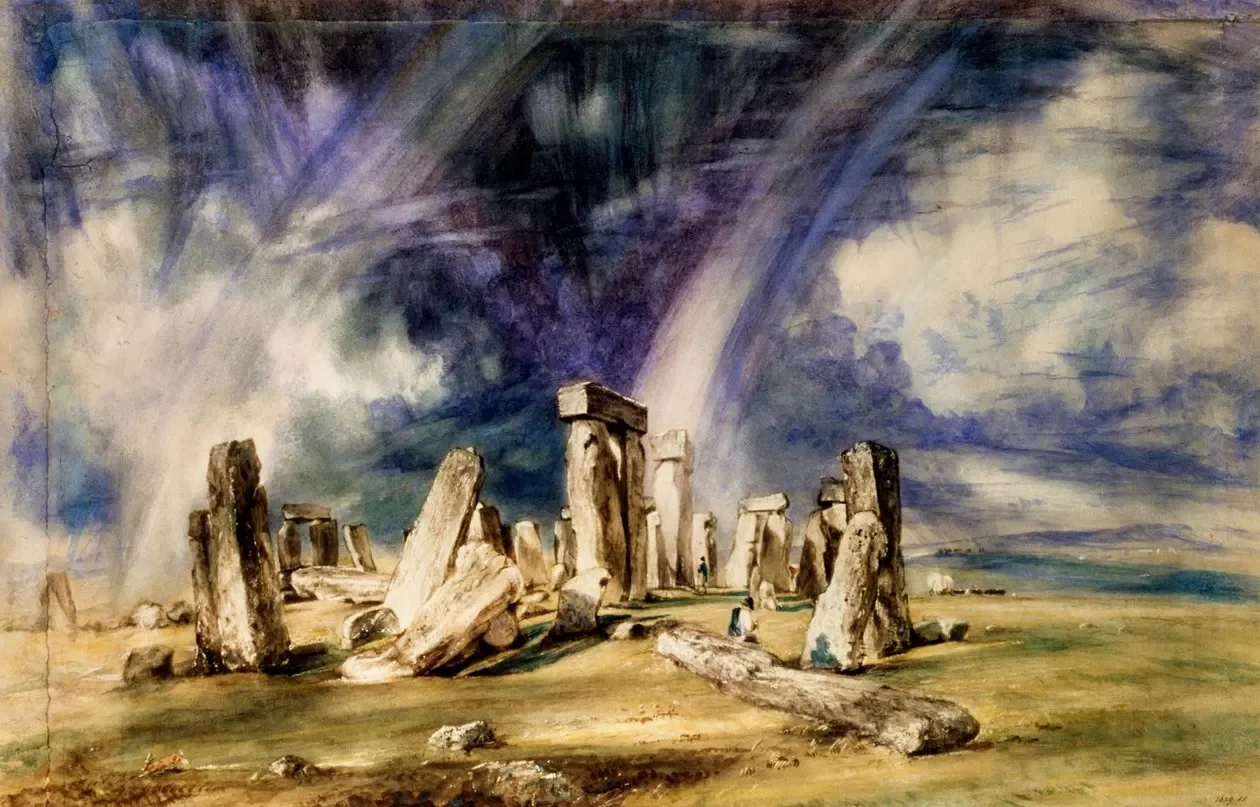
John Constable’s 1835 watercolour of Stonehenge, before it was reconfigured in the 20th century
Between 1901 and 1964, 13 of the 17 sarsen stones (the big ones) currently standing in the outer circle were either straightened or re-erected from a fallen position, with most then set in concrete. Many of the smaller bluestones were also moved or reinforced, and more than half of the surrounding land was excavated by archaeologists.
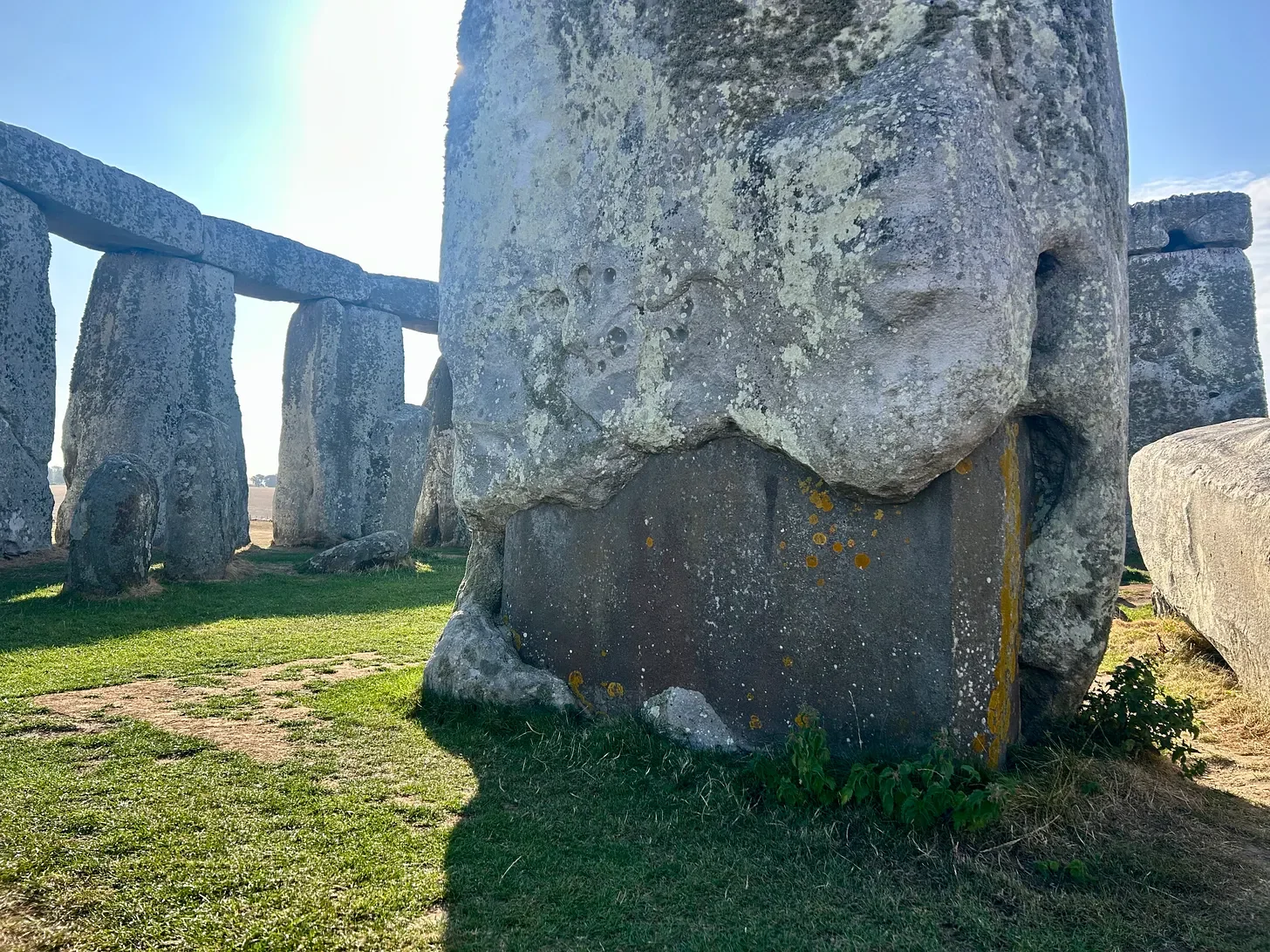
One of the steel-reinforced concrete bases supporting the stones
Some of the bluestones have been sucked underground, absorbed into the earth through centuries of stillness. Charles Darwin even visited Stonehenge in 1877 to study how earthworms could bury enormous objects over time, by the continual process of burrowing, digesting and excreting soil. He used fallen stones on the edge of the circle as case studies.
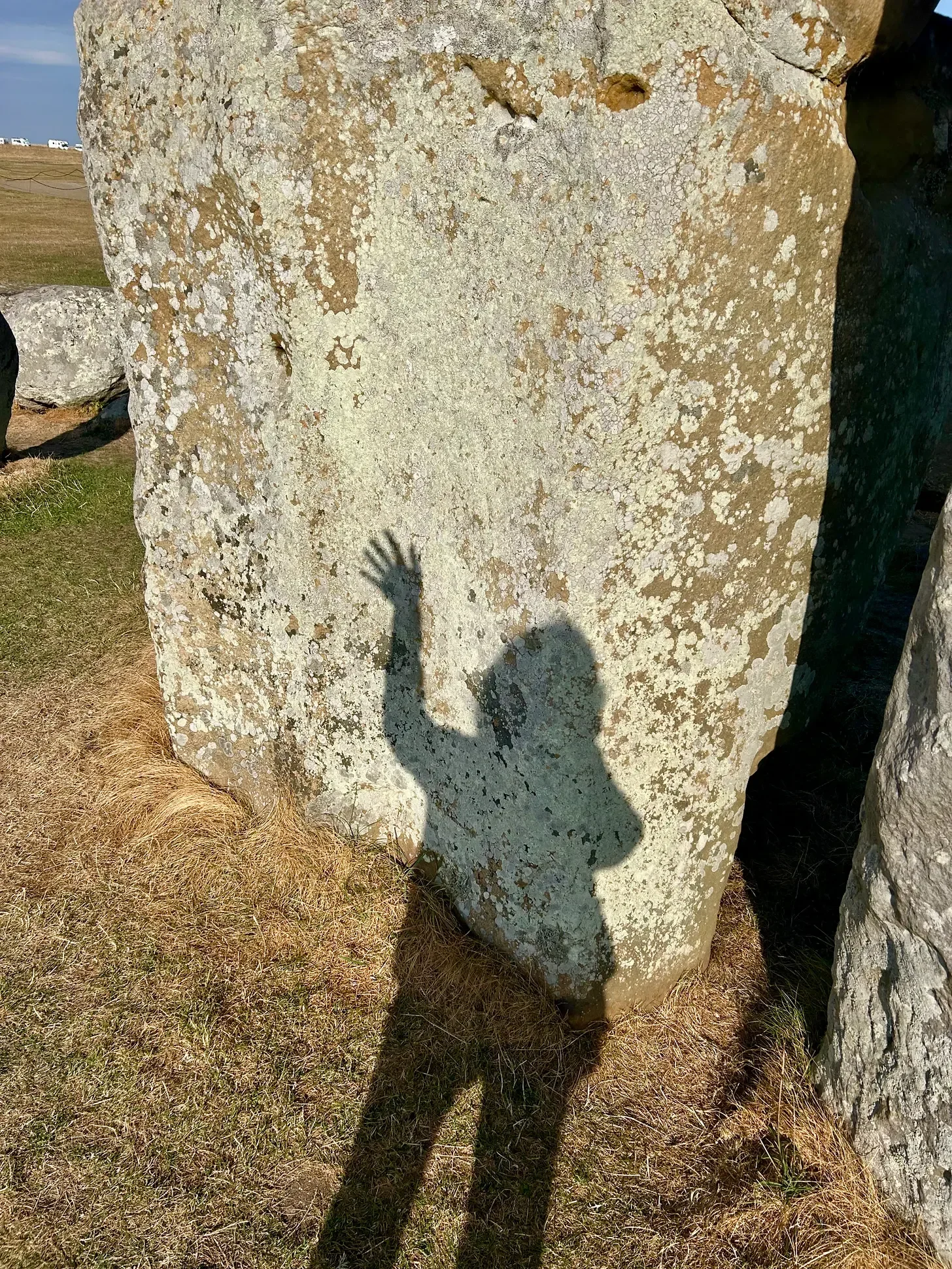
13 of the 17 sarsen stones were either straightened or re-erected in the 20th century
The year they started large-scale conservation work was also the first time Stonehenge was enclosed and an admission charge introduced for visitors, although it was still in private ownership until 1918, when the landowner Cecil Chubb gifted it to the nation. Today, the stones are owned by the King, the monument is cared for by English Heritage, and the surrounding land is owned by the National Trust.
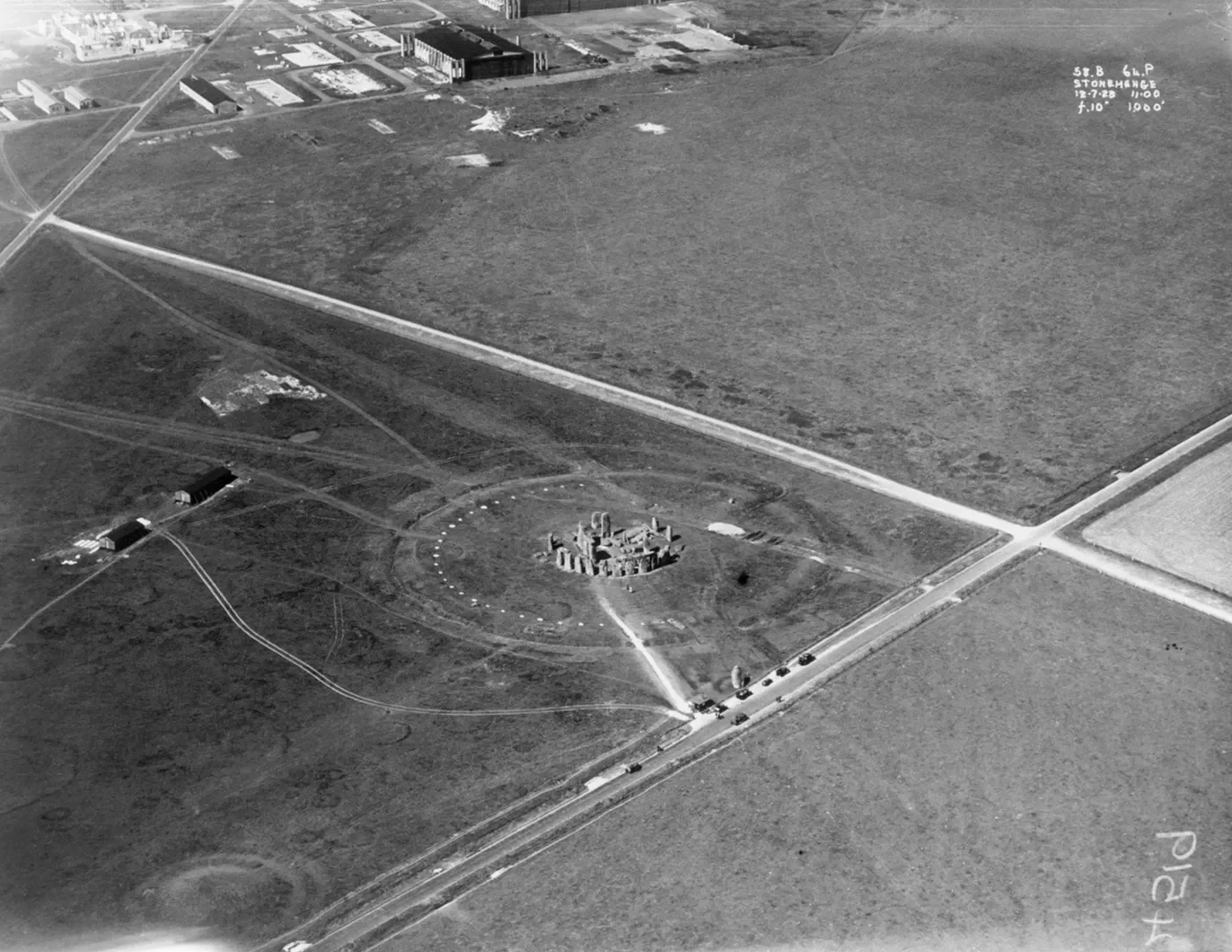
Aerial view of Stonehenge with the aerodrome in the background, 1928
In 1917, an aerodrome was built next to Stonehenge as part of an operation to increase the number of bomber planes in service. It was only in use for four years, and by the 1930s, the remaining buildings had been demolished as part of a campaign to restore the Stonehenge skyline.
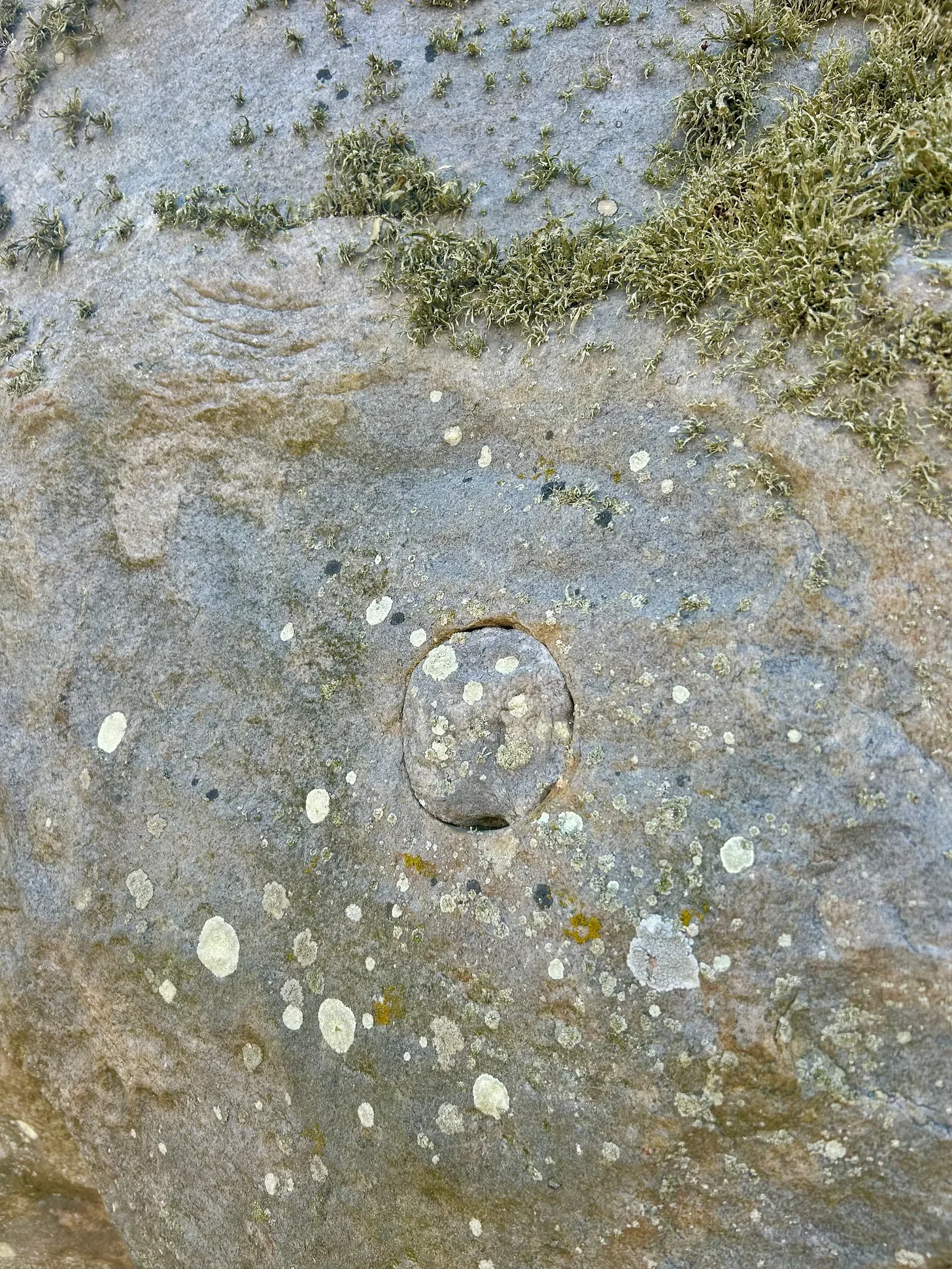
The remnant of a bore-hole survey used to analyse the composition of the stones
Throughout the second half of the 20th century, people continued to make their mark on Stonehenge:
In the late 50s, somebody tried to paint white peace signs on the stones in protest against nuclear weapons, except they missed out the bottom prong and accidentally painted the Mercedes Benz symbol instead.
In 1984, vandals sprayed purple paint on the stones, and in 2024, Just Stop Oil did the same with orange powder.
In 2007, three fathers’ rights activists climbed onto the stones dressed as Flintstones characters, planning to stay for three days but eventually climbing down later the same afternoon.
And for a while, plans were made to replace the A303 with an expensive underground tunnel, potentially destroying thousands of prehistoric artefacts still hidden in the earth, and disturbing the sacred nature of the monument. Fortunately these plans were shelved due to cost and public opinion, which means we can still enjoy the full Stonehenge experience of crawling past with the rest of the idling traffic as we all take our eyes off the road to gaze at the stones from afar. Collisions be damned!
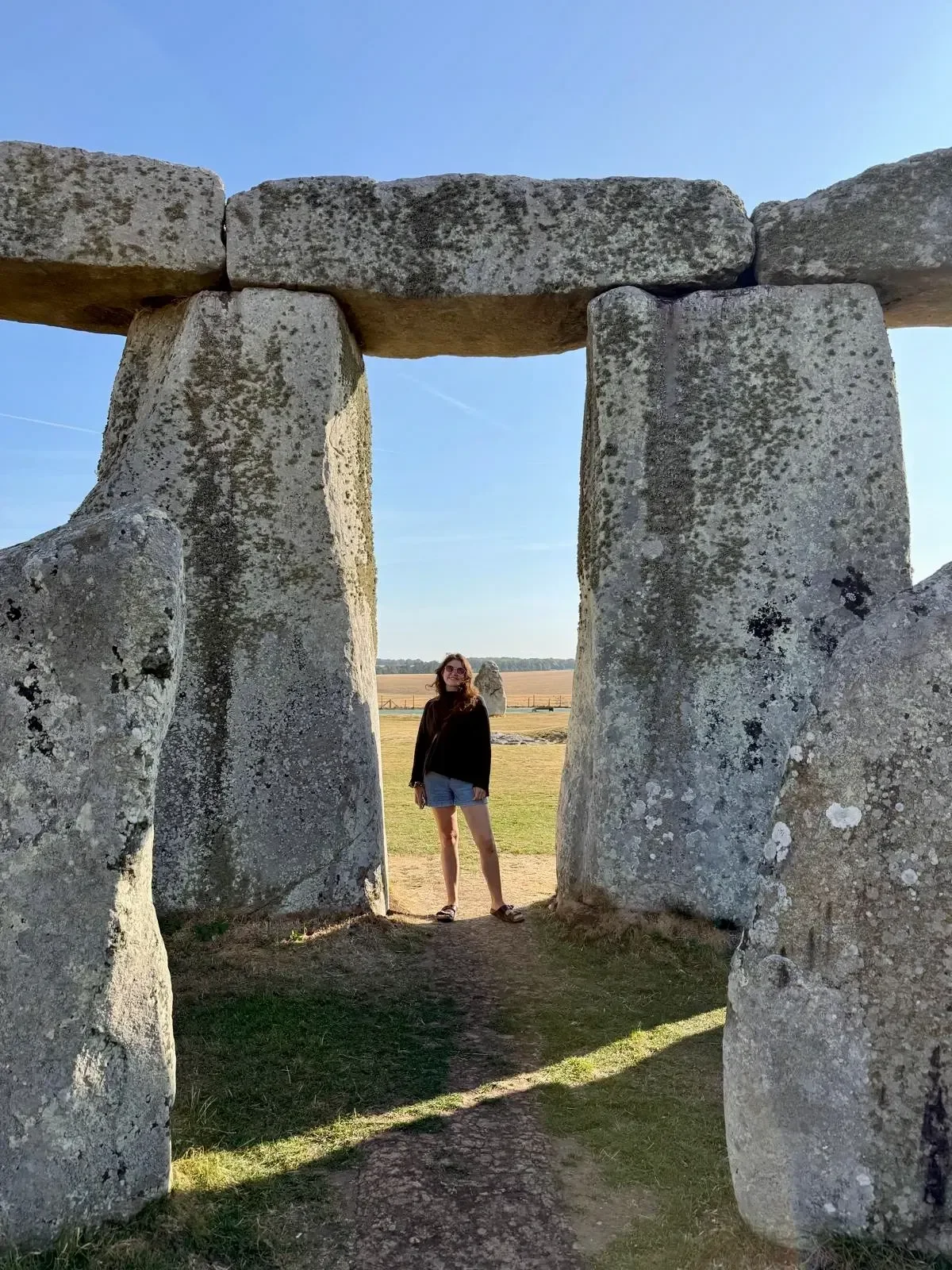
Spot the ‘heel stone’ behind my left shoulder
At what point does an act of vandalism or interference become part of an object’s identity? Concrete and graffiti were not originally part of Stonehenge, but through the lens of time, these crude additions seem almost charming. Even the most climate-conscious of us were pissed with Just Stop Oil’s orange powder protest, but imagine if in a hundred years from now, an archaeologist working through the latest 50°C heatwave found a speck of orange powder in a soil sample? It would be thrilling! There is something wonderful about encountering historical artefacts that are not kept behind glass. Risky, yes - but alive!
Thanks to English Heritage for showing me and the Butser Ancient Farm team around Stonehenge in the early hours of an August morning. It was magical.
