The Curious Case of American Exceptionalism
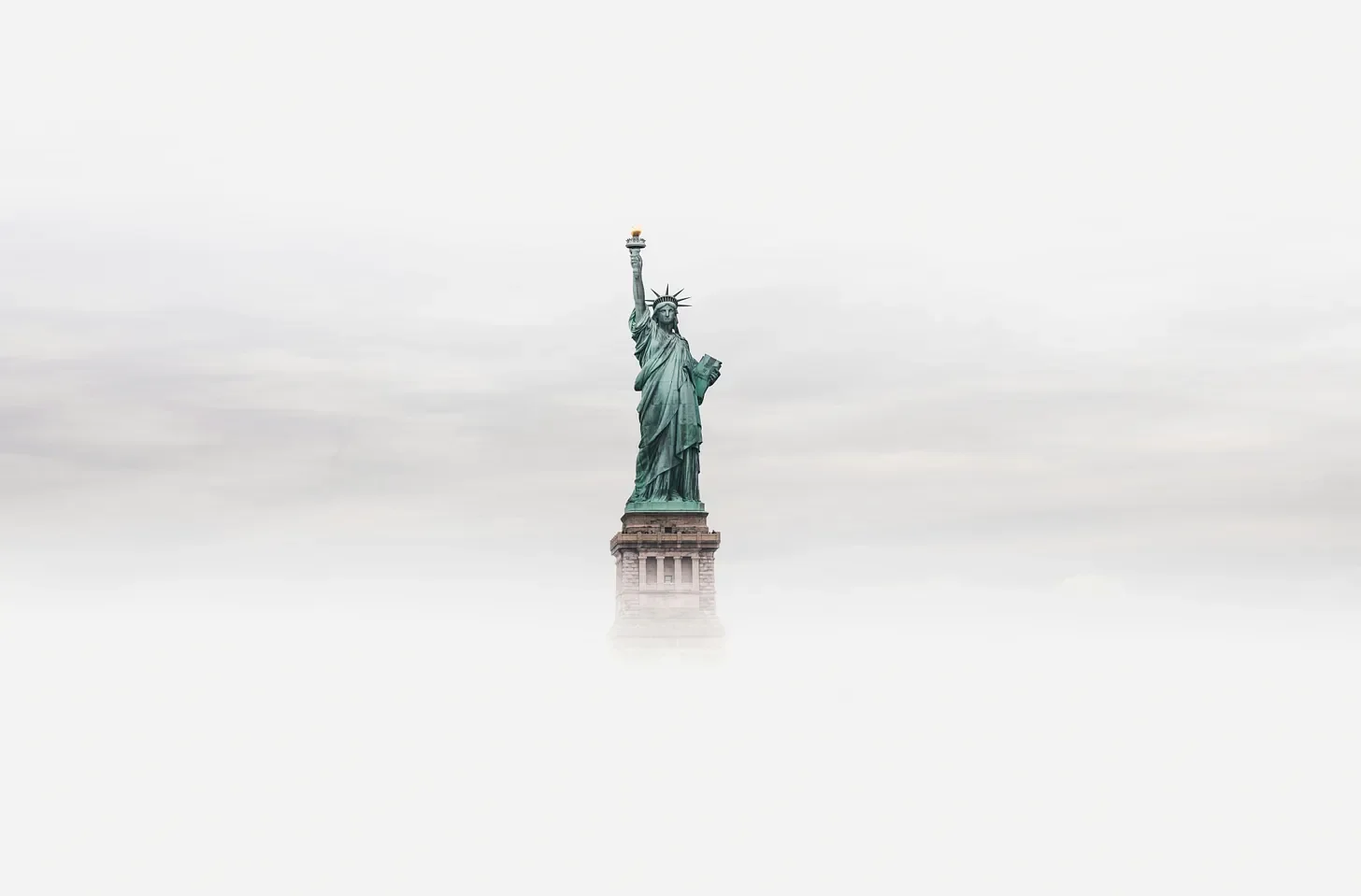
I was nine years old when the September 11 attacks happened, but it’s one of my earliest memories of being aware of the United States of America. The significance of the event escaped me at the time, but I remember coming home from school and thinking it was strange that all the TV channels were looping the same news footage (except BBC 2 which was playing the Tweenies). As a British kid, I grew up with a vision of the US as the ‘leaders of the free world’. That ‘city upon a hill’, a phrase taken from the Sermon on the Mount, has come to symbolise a nation in which good Christian values can be demonstrated for all the world to see - and be exposed if they should fail. The expectation that this New World nation, free from the shackles of Old World feudalism, might pioneer a social foundation from which the future of civilisation could grow, fertilised with hard work, ambition and decency.
Throughout history, global proponents of American exceptionalism have believed that the US has a unique mission to transform the world, based on some or all of the core principles of the American Revolution: Liberty, individualism, republicanism, democracy, meritocracy and laissez-faire economics. Above all, it was the idea of the ‘Great American Experiment’ that shaped the exceptionalism idea; the United States’ venture into self-government and democracy, breaking away from powerful British rule in the 18th century and creating their own constitution to guarantee the rights of all its citizens. In the words of the Declaration of Independence:
‘All men are created equal… with certain unalienable Rights, that among these are Life, Liberty and the pursuit of Happiness.’
A blank slate, forward vision, good values and hard work add up to a great experiment indeed, and one definitely worth pursuing. But the question is, at what point do you conclude that the experiment has failed?
Perhaps it’s because the British are so devoutly self-deprecating, but when I was at school, it was generally agreed that boasting and big-headedness were not nice attributes. As children, we were encouraged to listen to others, be kind, cooperate and value other people’s points of view. And while it’s also true that, between imposter syndrome, self-doubt and insecurity, humility can run too deep, it is almost never a bad idea to listen to the opinions of others.
And I imagine this is why the idea of American exceptionalism feels so jarring to those of us on the outside of America, looking in. In 2015, former VP Dick Cheney literally co-authored a book called Exceptional, quoting Lincoln’s vision of the US as ‘the last, best hope of earth.’ The idea is baffling to me, in the same way it would be baffling to hear any nation describe themselves as such. Even handsome Barack Obama stated that he believed in American exceptionalism, just as ‘the Brits believe in British exceptionalism and the Greeks believe in Greek exceptionalism.’ I guess I’m just too woke but am I the only one who does not believe in British exceptionalism? Somewhere between the British Empire, Brexit and Boris Johnson, I fell out of love with the idea that Britain knows best.
And yes, yes, here come the Daily Mailers with their list of all the great things Britain has done. Of course we have! But we’ve done a lot of shit too, and I don’t need to write about the good or bad stuff to recognise that exceptionalism from any nation is just plain old-fashioned. I am more drawn to my European identity than my British one, and I feel embarrassed and betrayed by my countrymen when I’m standing in the non-EU queue at the airport with my sad, little black passport.
But there are many things I love about my country. I’m a stereotypical white woman from the south of England. I love tea, crisps and apologising. I have a favourite National Trust property. I have the BBC Pride and Prejudice memorised scene-by-scene. It isn’t betraying your cultural traditions to not assume your country is better than everyone else’s. Even if such a country existed with a utopian society, a squeaky clean past and a shining future, it would still not have the right to speak over everyone else.
At the heart of it all, I guess it’s this American Dream fiasco - the idea that anyone can succeed in the US if they have hard work and determination. A lovely sentiment in a regulated world, perhaps. But if The Great Gatsby taught us anything, it’s that this dream has become corrupted. Success, for many, has become synonymous with exuberant wealth. Capitalism, by definition, requires the exploitation of the poor so that wealth can be funnelled upwards. It is impossible for everyone to be rich in a capitalist system unless that system is regulated so that nobody has more than their fair share. There can be no greater shattering of the American Dream than seeing Donald Trump and Elon Musk in the White House.
The late Jimmy Carter, 39th President of the United States, once said:
‘The measure of a society is found in how they treat their weakest and most helpless citizens.’
Despite being the wealthiest country in the world, more than 38 million people live in poverty in the United States, according to Oxfam. As of February 2025, the federal minimum wage in the United States is $7.25 per hour, a rate that hasn’t changed since 2009. There is no free healthcare, which never fails to astound me as someone lucky enough to be on the receiving end of the NHS. And the current sitting president has so many moral deformities I honestly don’t know where to begin. Are the people of America the leaders of the free world? Or are they just like the rest of us, wading through the quagmire of modernity, oligarchy, techno feudalism and climate catastrophe, trying to keep their heads - literally and figuratively - above water?
I am very grateful to those subscribers who follow me from the US - one in five of you, in fact! And I hope I haven’t offended you from over the pond. But I don’t think it’s helpful to see countries as population blocks rather than millions of individual people with their own opinions and experiences. The US, like the rest of us, is more divided than ever. And from the outside, many of us are totally perplexed by what’s going on over there. What’s the vibe? Are you ok? Do you care?
The irony is that under the Trump administration, the US is currently pretty exceptional if you’re going by the dictionary definition of ‘not the norm’. Fortunately, it is indeed exceptional these days to ban books, criminalise abortion and undermine democracy, particularly in the Western sphere of influence. Bureaucracy is far from perfect in any government structure, but if it’s a choice of slow and complicated or moving fast and breaking things, I’ll take ink blots and paperwork any day.
America, I beseech thee. Prove your exceptionalism, turn this boat around and sail back to the 21st century. We miss you!
If you enjoyed this post…
One of the best books I’ve ever read, The Unwinding: Thirty Years of American Decline by George Packer (Vintage, 2019)
Watch The Century of the Self documentary and question everything you thought you knew about freedom and choice.
